Anime’s influence on Western animation runs deep, stretching back as far as the 1980s. Ever since Japanese animated shows found their way onto Western TV sets, the appetite for anime has grown exponentially. Western studios recognized this almost immediately, taking cues from anime’s distinct storytelling, dynamic visuals, and emotional depth. Today, the influence of anime on Western animation is impossible to ignore.
While nearly every modern animated series owes something to anime, a few have gone further. These are the shows that don’t just nod to their Japanese influences, they embrace them. From stylized character designs and serialized storylines to morally complex heroes and cinematic fight sequences, these Western animated shows that feel like anime could easily be mistaken for the real thing.
What’s more, that’s far from a bad thing. These shows represent some of the finest examples of Western animation, blending anime-inspired visuals with compelling narratives and innovative worldbuilding. With emotionally rich stories, breathtaking animation, and an understanding of how to make every frame matter, these Western animated series are proof that anime’s global legacy continues to thrive.
Thundercats (2011-2012)
A Fantasy Adventure Reboot With A Distinctly Anime Soul
The 2011 reboot of Thundercats took a bold swing at revamping a classic ‘80s franchise, and it did so by embracing anime aesthetics. Its animation, produced by Studio 4°C (known for Batman: Gotham Knight), brought a fluid, cinematic quality that gave every sword clash and chase scene an epic weight rarely seen in Western cartoons.
Beyond the visuals, Thundercats excelled in serialized storytelling – a hallmark of anime. Prince Lion-O (voiced by Will Friedle) wasn’t just a static hero; he grew, faltered, and learned through an ongoing journey of self-discovery that mirrored the character arcs found in Naruto or Fullmetal Alchemist: Brotherhood.
Despite its short run, the 2011 iteration of Thundercats stood out as one of the most visually impressive and narratively ambitious Western animated shows that feel like anime. It treated its fantasy world with sincerity and scope, cementing itself as a cult favorite among fans of both classic cartoons and anime epics.
Jackie Chan Adventures (2000-2005)
A Fast-Paced Fusion Of Kung Fu, Magic, And Anime-Inspired Action
Jackie Chan and Uncle Chant in Jackie Chan Adventures
The Kids’ WB series Jackie Chan Adventures blended martial arts, mythology, and slapstick humor into a wildly inventive animated series. While voiced by James Sie as Jackie Chan, the show’s exaggerated fight choreography and supernatural storylines felt straight out of a shōnen anime.
Its recurring arcs – centered on magical talismans and escalating battles against demonic enemies – gave it the momentum of an ongoing anime saga. Each season built on the last, expanding the world and deepening its characters, from the wise-cracking Uncle (Sab Shimono) to the resourceful Jade (Stacie Chan).
The show’s kinetic energy, expressive animation, and blend of humor and heart made it feel more akin to Dragon Ball Z than a typical Western Saturday morning cartoon. Jackie Chan Adventures didn’t just borrow anime flair – it mastered it.
She-Ra And The Princesses Of Power (2018-2020)
A Character-Driven Fantasy Epic With Anime-Style Heart And Visuals
Catra Pleading With A Lifeless Adora In She-Ra & The Princesses Of Power Season 5, Episode 13, “Heart Part 2”
Netflix’s She-Ra and the Princesses of Power reimagined the ‘80s icon into a bold, emotionally resonant saga. Showrunner ND Stevenson leaned heavily on anime-inspired storytelling, creating sweeping multi-season arcs, emotional character bonds, and epic transformations that would make any Sailor Moon fan smile.
Adora (Aimee Carrero) and Catra’s (AJ Michalka) evolving relationship became the emotional core – complex, tragic, and cathartic, much like the rivalries central to many anime classics. The show’s vibrant art style, expressive eyes, and dramatic emotional beats made it feel less like a Western cartoon and more like a heartfelt anime odyssey.
Princesses of Power balanced humor, action, and deep themes about identity and belonging, proving that Western animation could tell stories as heartfelt and layered as anime’s best. It’s one of the most successful Western animated shows that feel like anime because it truly understood the genre’s emotional power.
Megas XLR (2004-2005)
A Love Letter To Mecha Anime Wrapped In Absurd American Humor
Before meta-humor became mainstream, the underrated 2000 kids cartoonMegas XLR was already parodying and celebrating anime tropes. The show followed slacker Coop (David DeLuise) who modifies a giant robot to defend Earth – essentially turning the mecha genre on its head. Its premise alone feels like Gurren Lagann filtered through a New Jersey garage.
Every episode was packed with anime references – from mecha transformations to explosive battles that shattered city skylines. Yet, Megas XLR’s heart was in its self-aware humor. It embraced the absurdity of anime-style storytelling while honoring the artistry behind it.
Despite its comedic tone, the show’s action sequences were animated with genuine intensity and flair, rivaling its Japanese counterparts. Megas XLR remains a hidden gem of Cartoon Network in the 2000s that’s as much an anime homage as it is a critique, proving that Western animation could parody anime without losing respect for it.
Samurai Jack (2004-2017)
Stylish, Cinematic, And Steeped In Japanese Influence
Genndy Tartakovsky’s Samurai Jack was an artistic marvel from the start. Following the time-displaced samurai Jack (voiced by Phil LaMarr), the series blended minimalist storytelling with striking visuals inspired by Japanese art and anime cinematography. Every frame was carefully composed, often wordless, relying on movement and mood over dialogue.
The show’s fight choreography was pure anime brilliance – precise, emotional, and beautifully paced. Tartakovsky’s direction mirrored the deliberate framing of classic samurai anime like Rurouni Kenshin and Samurai Champloo, with Jack’s battles often serving as philosophical reflections on honor and solitude.
Samurai Jack didn’t just borrow from anime, it transcended cultural boundaries, creating a meditative tone that resonated globally. Its final season pushed the storytelling even further, blending tragedy and redemption in a way that rivaled anime’s finest arcs.
Blue Eye Samurai (2023-Present)
A Netflix Epic That Blurs The Line Between Anime And Western Animation
Mizu and warriors in Blue Eye Samurai
Netflix’s Blue Eye Samurai feels so authentically Japanese that it’s easy to forget it’s a Western production. Set in Edo-period Japan, it follows Mizu (Maya Erskine), a mixed-race swordswoman seeking vengeance. The show’s hand-painted look, deliberate pacing, and emotionally charged storytelling make it nearly indistinguishable from high-end anime.
Creators Michael Green and Amber Noizumi designed it to blend Western writing sensibilities with the depth and artistry of Japanese anime. Its fluid sword fights, breathtaking landscapes, and emotional complexity rival Demon Slayer or Princess Mononoke.
Blue Eye Samurai is one of the clearest modern examples of Western animated shows that feel like anime – not because it mimics anime, but because it understands it. It’s a stunning fusion of cultural storytelling styles that shows how global the art form of animation has become.
Castlevania (2017-2021)
A Dark, Mature Gothic Tale Inspired By Anime Aesthetics
Based on the iconic Konami video game, Netflix’s Castlevania brought anime-style Gothic horror to Western audiences. Its animation echoes the intricate linework and atmospheric tone of dark fantasy anime like Berserk and Vampire Hunter D.
Trevor Belmont (Richard Armitage), Sypha Belnades (Alejandra Reynoso), and Alucard (James Callis) formed a morally complex trio whose arcs unfolded like an anime saga full of betrayal, redemption, and tragedy. The series didn’t shy away from adult themes, violence, or existential dread, treating its audience with the same respect that mature anime often do.
Castlevania’s fusion of Western narrative structure with anime-inspired visuals and pacing made it a groundbreaking success. It proved that Western animation could achieve the same emotional depth and cinematic intensity as Japan’s best.
Voltron: Legendary Defender (2016-2018)
A Western Revival That Honors Its Anime Origins
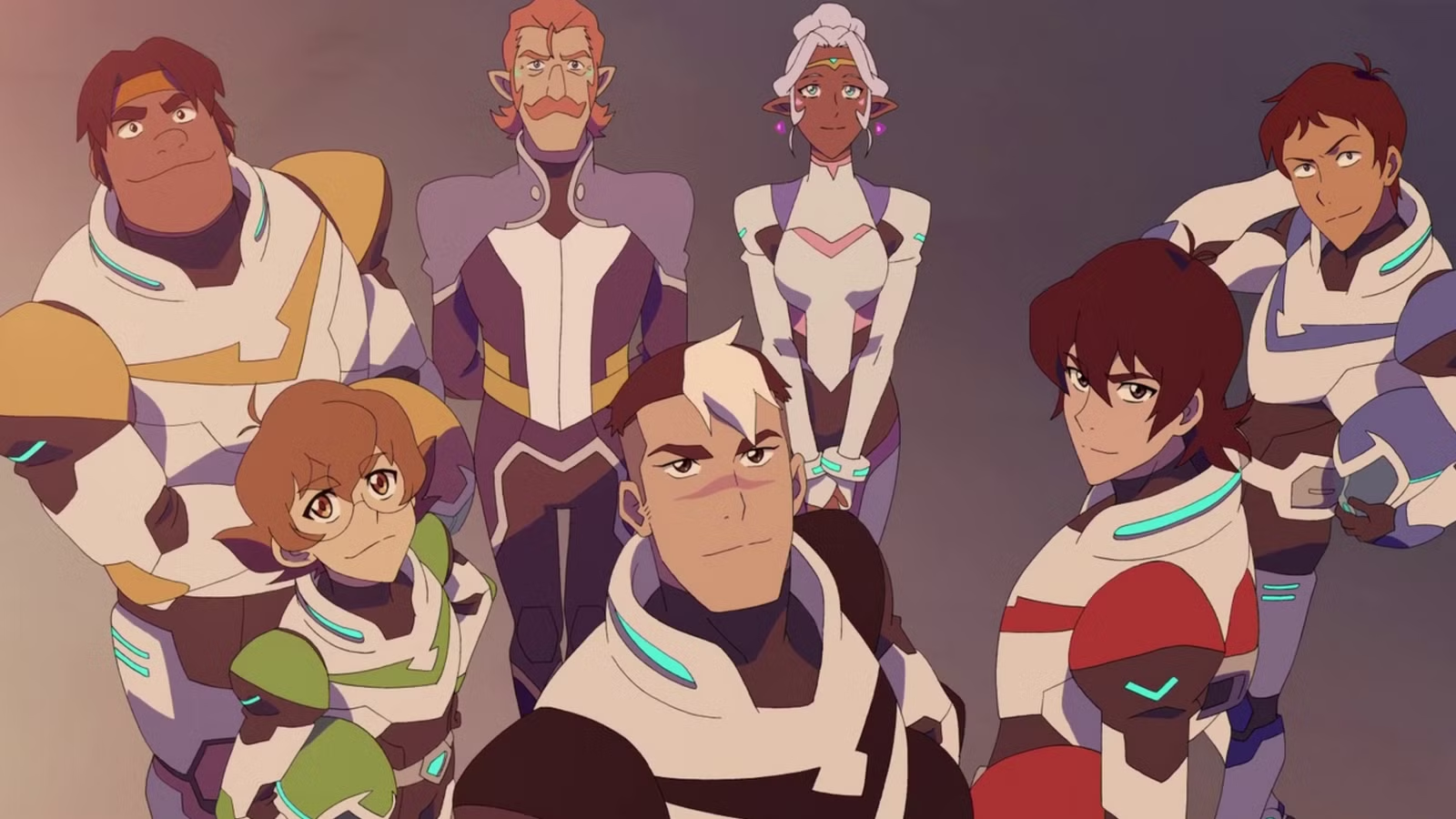
Voltron: Legendary Defender occupies a unique spot in animation history – it’s both a Western series and a direct descendant of a Japanese anime. Developed by animation veterans Lauren Montgomery and Joaquim Dos Santos, this Netflix reboot elevated the classic mecha series Beast King GoLion (which became 1980’s Voltron) into a sprawling sci-fi epic.
Its dynamic battles, expressive characters, and serialized arcs were quintessentially anime. The emotional depth – especially the struggles of Shiro (Josh Keaton) and Keith (Steven Yeun) – gave it a sincerity often absent from action cartoons.
While clearly Western in its production and writing, Voltron: Legendary Defender never lost sight of its anime DNA. It celebrated the genre that birthed it, modernizing mecha storytelling for a new generation while keeping that unmistakable anime heart beating strong.
Teen Titans (2003-2006)
A Superhero Show That Perfectly Captured Anime’s Visual Energy
The Teen Titans and Raven stand up to Trigon.
Long before anime became mainstream in the U.S., Teen Titans was already blending the two worlds. Its bold mix of American superhero storytelling and Japanese visual sensibilities made it stand out from everything else on TV. Robin (Scott Menville), Starfire (Hynden Walch), and Raven (Tara Strong) were written with emotional nuance that rivaled anime protagonists.
The exaggerated facial expressions, chibi-style reactions, and stylized fight choreography were direct homages to anime’s expressiveness. Yet, it balanced this with mature, serialized storylines – especially Raven’s multi-episode arc – that gave it dramatic weight beyond a typical superhero cartoon.
Teen Titans became a generation-defining series precisely because it blurred the line between Western and Japanese animation. It looked, felt, and often acted like an anime, setting a precedent for everything that followed.
Avatar: The Last Airbender (2005-2008)
A Western Masterpiece That Feels Like Pure Anime Storytelling
Azula lightningbending at Aang in the Avatar: the Last Airbender episode The Drill
Few Western animated shows have captured anime’s spirit as perfectly as Avatar: The Last Airbender. From its richly built world to its serialized storytelling and spiritual depth, the series remains a benchmark for what Western animation can achieve.
Aang (Zach Tyler Eisen), Katara (Mae Whitman), and Zuko (Dante Basco) embarked on character arcs worthy of the best anime epics, complete with moral ambiguity, growth, and heartbreak. The show’s elemental “bending” battles were choreographed with martial arts precision, animated in a way that rivaled even Japan’s top studios.
Avatar isn’t just one of the greatest Western animated shows that feel like anime – it’s one of the best animated series ever made. By blending the emotional storytelling of anime with the accessibility of Western animation, it created something timeless, powerful, and universally beloved.





0 Comments