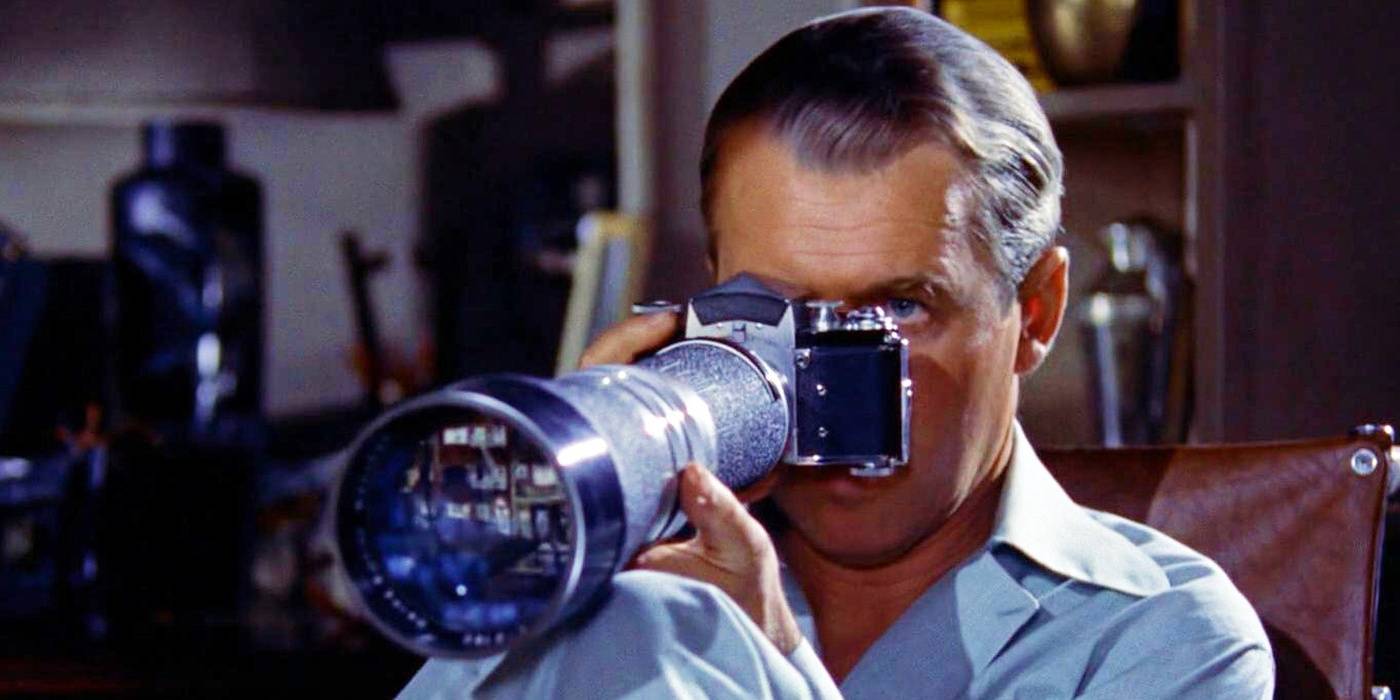
Here are the Best Movies of All Time, as evaluated by Screen Rant. Covering Guillermo del Toro’s Pan’s Labyrinth to Alfred Hitchcock’s classic thriller Rear Window, with cartoon rats, gangsters and superheroes in between, it’s the perfect list for emerging cinephiles or checking off essential watches.
Deciding the best movies ever takes a balance of objective and subjective preference, which can differ for industry professionals and general viewers. Something as important as the greatest movies of all time requires some advanced thinking, beyond the opinion of a single writer. With that in mind, Screen Rant’s ranking collates critical scores and the opinions of movie lovers to compile the definitive list of the most highly rated movies of all time.
60
The Grapes of Wrath (1940)
An incredibly important moment in the history of the United States of America, The Grapes of Wrath began life in 1939 as John Steinbeck’s Pulitzer prize-winning novel. A year later, legend of cinema John Ford took the reins of an adaptation that stars Henry Fonda as Tom Joad, a recently released prisoner who leads his family across the States to California after the Great Depression robs them of their farm and livelihood.
One of the greatest realist movies ever made, Ford’s take on the novel is a haunting look at a dark time in the country’s early history, buoyed by excellent performances – particularly from Fonda – and one of the earliest examples of Hollywood giving its platform to the voice of the working class.
59
The Devil Wears Prada (2006)
It’s hard to define The Devil Wears Prada, as it seems, at times, to have the energy of a great rom-com, but romance is far from the central plot of this iconic 2000s film. Instead, the movie looks at the fashion industry, at ambitious women and the sacrifices that they make to be successful, and at female friendships (even if they do not start out as friendships at all).
It’s a movie that defies easy categorization because it refused to play by the rules of drama, with a style and brightness more fitting a comedy, but is too sincere to truly be considered a comedy. Instead, it stands entirely on its own – and is stunning for knowing exactly what it is, and refusing to apologize for it. Miranda would be proud.
The Devil Wears Prada has also had an impressively lasting impact on pop culture – it was nominated for two Oscars, parodied by The Simpsons and The Office, and even referenced in politics, when Senator Amy Klobuchar was compared to Miranda Priestly while she was seeking the Democratic Presidential Nomination.
It has become entrenched in the pop culture language of memes and gifs, and has become the defining portrayal of over-demanding bosses and of overworked assistants. And now, almost two decades after the original release, a sequel has been announced as on the way. Whether it can find the same success of the original, of course, is yet to be seen.
58
Ratatouille (2007)
After convincing the world’s children that their toys were alive, and painting imaginative worlds for insects, cars, the monsters under their beds, fish, and superheroes, Pixar took their boldest step by telling the story of a gourmet rat. As perverse as the idea might have appeared, Ratatouille — directed by Brad Bird and Jan Pinkava — is a gentle meditation on following dreams and the wholesome pursuit of art.
Patton Oswalt is the rat, Remy, who commandeers the career of aspiring chef Alfredo Linguini (Lou Romano) to explore his passion. It’s a joyous, heart-filled, and personal comedy-drama that deserves to rank alongside Pixar’s best, with an infamous reflection on the nature of criticism as a great stinger.
57
12 Years A Slave (2013)
The 2013 biographical drama is based on the 1853 memoir by Solomon Northup, a free Black man kidnapped and sold into slavery in 1941. Northup is forced to work on Louisiana plantations with varying cruelties for 12 years before being released. The Steve McQueen-directed drama 12 Years a Slave isn’t easy to watch, but it’s an important and crucial piece of filmmaking that tells the honest, painful stories that need to be told.
It’s an upsetting portrait of the lows of humanity and a deeply emotional exploration of what it means to live, which is enhanced by the brilliant performances of Chiwetel Ejiofor and Lupita Nyong’o in her Oscar-winning feature film debut. 12 Years a Slave is also a triumph in cinema for its cinematography, moving score, and McQueen’s direction.
56
The Treasure Of The Sierra Madre (1948)
John Huston’s Western tells the story of two men who unite with an old prospector to search for gold in Mexico, only to face trouble from themselves and bandits after striking rich. The Treasure of the Sierra Madre is a thrilling portrait of greed and corruption, with the character of Fred Dobbs being one of the best performances of the legendary Humphrey Bogart’s career.
It’s an exciting Western and adventure film that uses dark humor to tell its moral lesson, with superb direction by master filmmaker John Huston and a screenplay that uses the magical presence and wit of a haggard Bogart to its greatest extent.
55
Jaws (1975)
Jaws is the ultimate expression of the power of suggestion in cinema. Partly out of necessity, thanks to a notoriously bumpy production, Spielberg’s big fish movie conspicuously chooses to show Bruce the shark, as he was affectionately known, very little. In place of showing him, his presence was anxiously felt thanks to perfect camera trickery that put the audience in the perverse position of underwater attacker, and a couple of notes on a tuba. And that was more than enough.
The film isn’t really about a shark, as much as it’s about paranoia and how humans react to startling tragedy. Roy Scheider is the everyman and the stand-in for the audience, equally as appalled by his community’s wilful ignorance to the shark as he is terrified by its threat. He takes it upon himself to deal with the situation, with a sceptical scientist type (Richard Dreyfus), and a walking-talking caricature in Robert Shaw’s Quint.
And it’s their fight for survival that becomes the most compelling part of Jaws, to the point that the final triumph is a true air-punching moment. – Simon Gallagher, Executive Editor
54
City Lights (1931)
A Silent And Romantic Charlie Chaplin Adventure
The wide-eyed Tramp recruits the help of an alcoholic millionaire to raise money to restore the eyesight of a blind flower seller with whom he has fallen in love. City Lights is the greatest use of filmmaker Charlie Chaplin’s iconic character The Tramp, with the actor-director continuing to delight critics and audiences with a silent picture four years after “talkies” began.
The film features some of the Tramp’s funniest sequences and a touching pathos as he attempts to romance a blind flower seller and earn money to restore her sight. City Lights is the genius intersection of Chaplin’s inimitable humor and sentiment, which proved that he didn’t need sound to craft a wonderful story in the new Hollywood.
53
Three Colors: Red (1994)
Three Colors: Red follows a model who meets a retired judge with an interest in listening to others’ private moments, after which time the two form an unexpected bond. The brilliant 1994 film is a quintessential example of art-house cinema that provides a warm and contemplative narrative of fate and human connection.
The final installment in Krzysztof Kieślowski’s Three Colors trilogy about French ideals, Red is celebrated for its beautiful depiction of camaraderie, bonds, and the interconnected lives of people who seemingly share little in common or represent opposing personalities and outlooks on the world.
52
Touch Of Evil (1958)
Orson Welles’ film noir centers on a murder mystery at the US/Mexico border. As a Mexican drug enforcement agent suspects an American police captain of planting evidence, the investigation places himself and his wife in danger. The twists and turns of Touch of Evil are a masterpiece in film noir and depict the grayness of good and evil.
Welles’ style, the performances of himself, Charlton Heston, and Janet Leigh, as well as the poignant music combine to form a vividly entertaining unorthodox pulp. As one of the best movies of all time, Touch of Evil is an essential viewing for film noir in the classic era and Welles’ filmography.
51
Pinocchio (1940)
Adapted from an 1883 Italian children’s story, Disney’s Pinocchio is about a wooden puppet who must prove himself worthy to become a real boy. Following Snow White (1937), Pinocchio is the second animated feature made by Disney, which was an ambitious venture with an emotional core that has stood the test of time.
Still culturally relevant today, the film was a brilliant technical achievement for Disney that set the tone for the enchanting nature, beautiful visuals, and storytelling power that became the golden standard for animation. Pinocchio was also the first animated feature to win a competitive award at the Oscars, including Best Original Song and Best Original Score.










0 Comments