After hitting its 25th anniversary on October 6, 2025, CSI: Crime Scene Investigation remains an important milestone in the evolution of network TV cop shows. The series’ Las Vegas setting was a welcome reprieve from its grittier, often Manhattan-based contemporaries, and CSI’s best characters remain iconic today. But the franchise offered even more to the procedural genre as a whole.
Despite past rumors of further spinoffs or revivals on the horizon, the future of the CSI franchise remains uncertain. Executive producer Jerry Bruckheimer has said there are no CSI projects currently in the pipeline, even if the audience for them undeniably exists. Nonetheless, the original series remains one of the most influential network procedurals of all time for good reason.
CSI Revolutionized Network TV Cop Shows By Focusing On Nothing But Scientists And Technicians
The Show Never Relied On Heroic Detectives Barging In With Guns Blazing
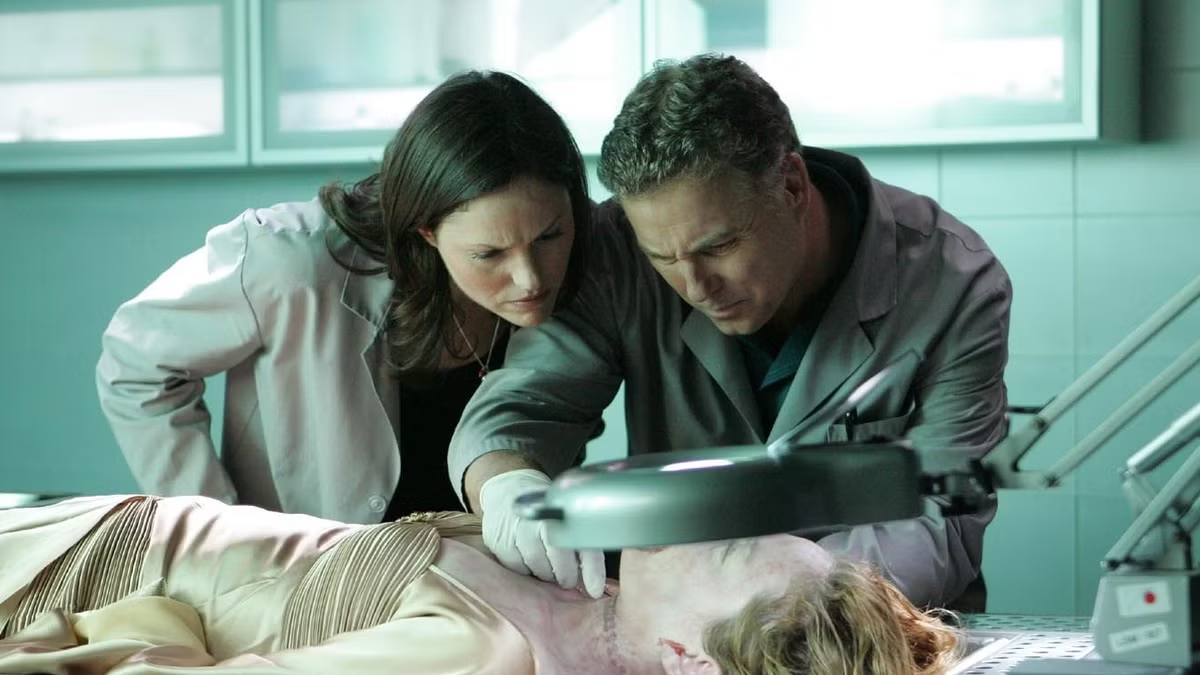
“Here comes the nerd squad.” That’s how a bit-part detective first introduces Gil Grissom and Jim Brass in the pilot episode of CSI: Crime Scene Investigation, and it immediately tells the audience they’re in for something new. Older procedurals like Law & Order and Hill Street Blues rarely showed lab techs as anything but bit parts.
With the notable exception of Quincy, M.E., the characters that Bones would later call “squints” often didn’t appear at all. Vague dialogue would mention sending evidence to the lab, and the results would come back after commercial. But CSI went beyond featuring squints all the way to popularizing them, and this focus on smarter crime-solving was beneficial for the audience.
Rather than another NYPD Blue about grizzled men with guns, CSI gave viewers a show in which the heroes catch bad guys using nothing but their brains. In the same way Criminal Minds would later become fun for its psychological trivia, CSI taught random yet intriguing science factoids about sexual development disorders or the similarities between leeches and Viagra.
For those curious, the latter is actually courtesy of Khandi Alexander’s Alexx Woods in CSI: Miami, and the answer is that leech saliva contains enzymes that expand the blood vessels.
The franchise did get a lot of heat for heavily influencing forensic inaccuracies in cop shows, often because most lab procedures take too long to accommodate TV story pacing. Additionally, there was much discussion about the “CSI effect,” the notion that juries put unduly high expectations on physical evidence while criminals were “learning how to get away with it.”
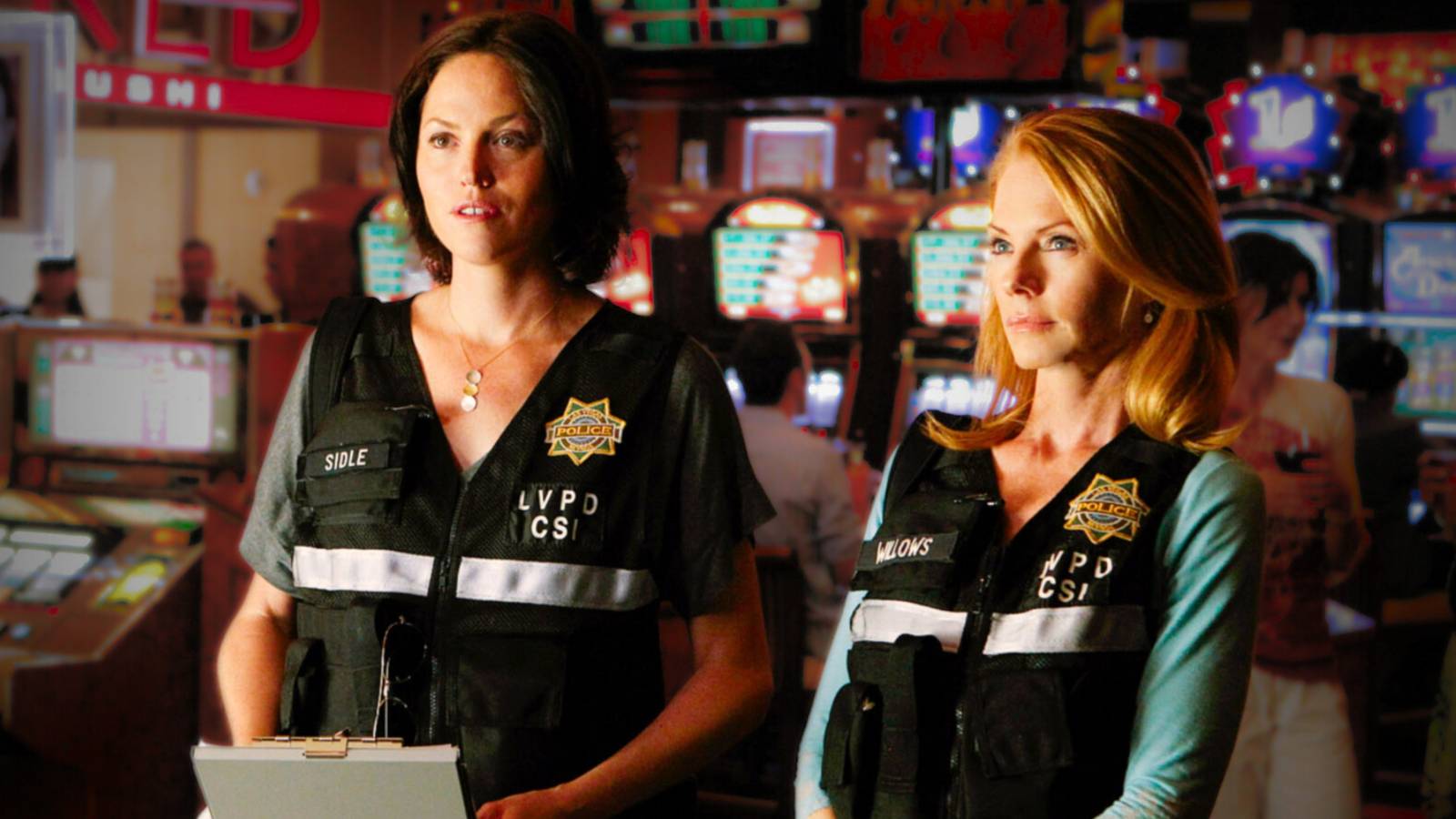
Yet there was a flipside to this, also. “Mean world syndrome,” the theory that those who overconsume media may see the world as unrealistically hostile, was arguably combated by the fact that the CSI team used science to resolve cases that initially appeared unsolvable. Catherine Willows addresses the impact of this to new recruit Holly Gribbs in CSI episode 1:
“The cops? Forget it. They wouldn’t know fingerprints from pawprints, and the detectives chase the lie. We solve. We restore peace of mind, and when you’re a victim, that’s everything.”
Another positive side of the CSI effect was that it taught victims the importance of leaving behind evidence. In 2011, The Guardian reported that a serial rapist was caught when a CSI-loving victim planted hair and saliva in his backseat. But making viewers more forensics-minded isn’t all CSI did for audiences, nor for TV itself.
CSI Taught Network TV Police Procedurals That It’s Okay To Have A Sense Of Humor
Gil Grissom Provided Oddball Humor Against A Backdrop Of Darkness
Despite its attention to scientific detail, CSI also contained some of the most inaccurate forensic investigations on TV. However, one thing it got right was that almost every character had a particular specialty. The lab’s chemist wouldn’t be the same person performing audio analysis on a tape recording, and the interactions between these characters opened the door for humor.
William Petersen’s Gil Grissom particularly balanced the show’s darkness with black comedy. Grissom was an oddball cop show protagonist for his time, the kind of guy whose idea of a first date was watching The Wizard of Oz set to Pink Floyd. And while some older shows like Columbo weren’t necessarily strangers to whimsy, CSI approached humor differently.
Darkness couldn’t be removed from a show that featured some of the first onscreen autopsies. This is a show that killed off a seemingly important character in the first two episodes. But it also opened every series with classic songs by The Who and included pun-based one-liners about horrific crimes.
Within six years of CSI’s premiere, shows like NCIS, Bones, and Dexter would likewise feature forensic investigators who brought eccentric humor into gruesome professions. But unless those shows ever featured a series of autopsies on a flock of wedding doves while a rabbi prayed over a lavender-skinned corpse bride, the CSI franchise’s morbidly absurdist tone remained unmatched throughout its run.
CSI’s Ratings Prove That Everything It Did To Change Network TV Was Actively Working
The Original CSI And Its Spinoffs Became Global Phenomena
It’s no surprise CSI affected public perception of forensics when considering just how many people were watching. The first season averaged 20 million viewers in the United States alone, rising gradually over the next few years. Although ratings dropped around the time Gil Grissom left CSI in season 9, the show would finish at just over half its initial average.
The international numbers were even more telling. Even after it ended its American run, Deadline reported that the Monte-Carlo Television Festival named CSI the most-watched drama worldwide for the sixth time in 2016.
Compared to Law & Order’s recent ratings struggles, this was an unimaginable victory. And, even accounting for the frustratingly untimely CSI: Vegas cancelation, CSI’s spinoffs performed strongly as well. In 2006, BBC reported that CSI: Miami was the most-watched program in the world overall, with CSI ranked sixth and future crossover series Without a Trace placing seventh.
Even those who never watched CSI: Miami, the less popular (yet successful) CSI: NY, or the ill-fated CSI: Cyber were keenly aware of them. This is especially true of the former, thanks to memes of David Caruso’s Horatio Caine putting on his sunglasses, popularized in part by shows like Late Show with David Letterman, The Simpsons, and Supernatural.
It’s been speculated that desire to go out on a high note was even part of how CSI: Miami led to David Caruso’s retirement. And while the CSI franchise’s popularity has waned over the years, its legacy remains everlasting after a full quarter century.
How CSI’s Impact On Network TV Is Still Felt In Police Procedurals Today
The NCIS Franchise Might Look Very Different Without CSI
The CSI effect’s influence on shows like NCIS has already been mentioned, but it really can’t be overstated. Even if NCIS’ Abby played a significant role in the fact that many future procedurals would have at least one lab tech in the main cast, CSI undoubtedly paved the way to no small degree.
During its tenure, CSI attracted numerous big names. Even Quentin Tarantino directed CSI for an episode, not to mention the show’s numerous celebrity cameos, including the likes of Ozzy Osbourne and Taylor Swift.
Today, celebrity cameos and the spotlighting of previously underrated law enforcement professions sometimes go hand in hand. Alan Tudyk’s Ellroy Basso in The Rookie, for instance, is a bioremediation specialist (a forensic cleaner). It’s hard to imagine a lighthearted series featuring such a scientific—and often messy—job before CSI came along.
After 25 years, the network police procedural landscape still owes a debt to CSI: Crime Scene Investigation and the many series, books, games, and other media that boosted the franchise to achieve global recognition. The show wasn’t without its faults, but its successes were enough to cement its place in pop culture history for the rest of the foreseeable future.
Enjoy ScreenRant’s primetime coverage? Click below to sign up for our weekly Network TV newsletter (make sure to check “Network TV” in your preferences) and get the inside scoop from actors and showrunners on your favorite series.
Kenneth Fink, Richard J. Lewis, Alec Smight, Danny Cannon, Brad Tanenbaum, Louis Shaw Milito, Jeffrey G. Hunt, Philip Conserva, Martha Coolidge, Bill Eagles, David Grossman, Duane Clark, Eagle Egilsson, Michael Nankin, Paris Barclay, Terrence O’Hara, Christopher Leitch, Deran Sarafian, Karen Gaviola, Lou Antonio, Michael Slovis, Peter Markle, Thomas J. Wright, Matt Earl Beesley









0 Comments