Due to the priceless contribution of Michael Schur to the workplace sitcom genre – he was the head writer for The Office, Parks and Recreation, and Brooklyn Nine-Nine – mockumentary TV shows like Abbott Elementarywill never go out of style. Perhaps it’s the opportunity to watch them evolve over the years that makes the format so successful for TV.
However, barring a few classics like What We Do in the Shadows, Surf’s Up, Borat, and This Is Spinal Tap, whose part 2 was released recently, mockumentary movies have struggled to become as successful as shows. What We Do in the Shadows became a TV show instead of a movie franchise, revealing the mockumentary format perhaps suits long-form storytelling more.
That format of filmmaking has instead suited the found footage horror movie genre much better, suggesting the vein of parody mockumentaries aim to create needs more groundwork to be effective than the usual feature film affords. However, there are some incredible uses of the mockumentary format in movies, which have defined the genre for the medium, and still remain iconic.
Project X (2012)
Why Project X‘s reputation precedes itself can’t be understood without watching it. The sheer amount of chaos, depravity, and destruction that occurs in the name of the biggest party ever thrown can only be explained by the fact that this was 2012. Mockumentaries are usually self-aware, but Project X celebrates the questionable acts occurring on-screen, thus becoming a guilty pleasure.
For many, Project X is the most juvenile film, while others remember it more fondly as the wildest artifact of its era. Everyone tried throwing a party as big and reckless as Project X for the next few years. The best movies like Project X have more to offer than unchecked debauchery, but you can’t argue with its cultural impact.
Borat Subsequent Moviefilm (2020)
It’s wild to think that a character like Borat, a product of his time, successfully returned 14 years later in 2020, but Sacha Baron Cohen proves he can parody any era, no matter how dark, with Borat Subsequent Moviefilm. It has the same strain of satirical and farcical comedy, but doesn’t hit the funny bone as hard as the original.
This time, Borat, with great danger to himself, enters America with his daughter, only to discover the COVID-19 pandemic has made it difficult to leave. With his trademark crude humor, Cohen parodies the state of the elections, the mismanagement of the pandemic, and newer parts of American culture that have been born in the 14 years since the first movie.
Surf’s Up (2007)
While Sony Animation has been finding incredible success in recent years with unique and aesthetically pleasing animated movies, such as the Spider-Verse franchise and the record-breaking KPop Demon Hunters, one of their greatest films ever, performed very poorly at the box office when it was initially released in 2007. It has since been reassessed and has a large fanbase today.
Surf’s Up was nominated for the Best Animated Picture Oscar in 2008.
Surf’s Up, an incredible blend of animation and mockumentary, follows a group of penguins during a high-stakes surfing competition in Antarctica. The movie is a parody of surfing documentaries, and its exaggerated and corny humor, alongside ironic gags, strike the perfect chord as the crew follows a teenage penguin who wants to break through as a surfer during that season.
Popstar: Never Stop Never Stopping (2016)
Andy Samberg and Jorma Taccone in Popstar: Never Stop Never Stopping
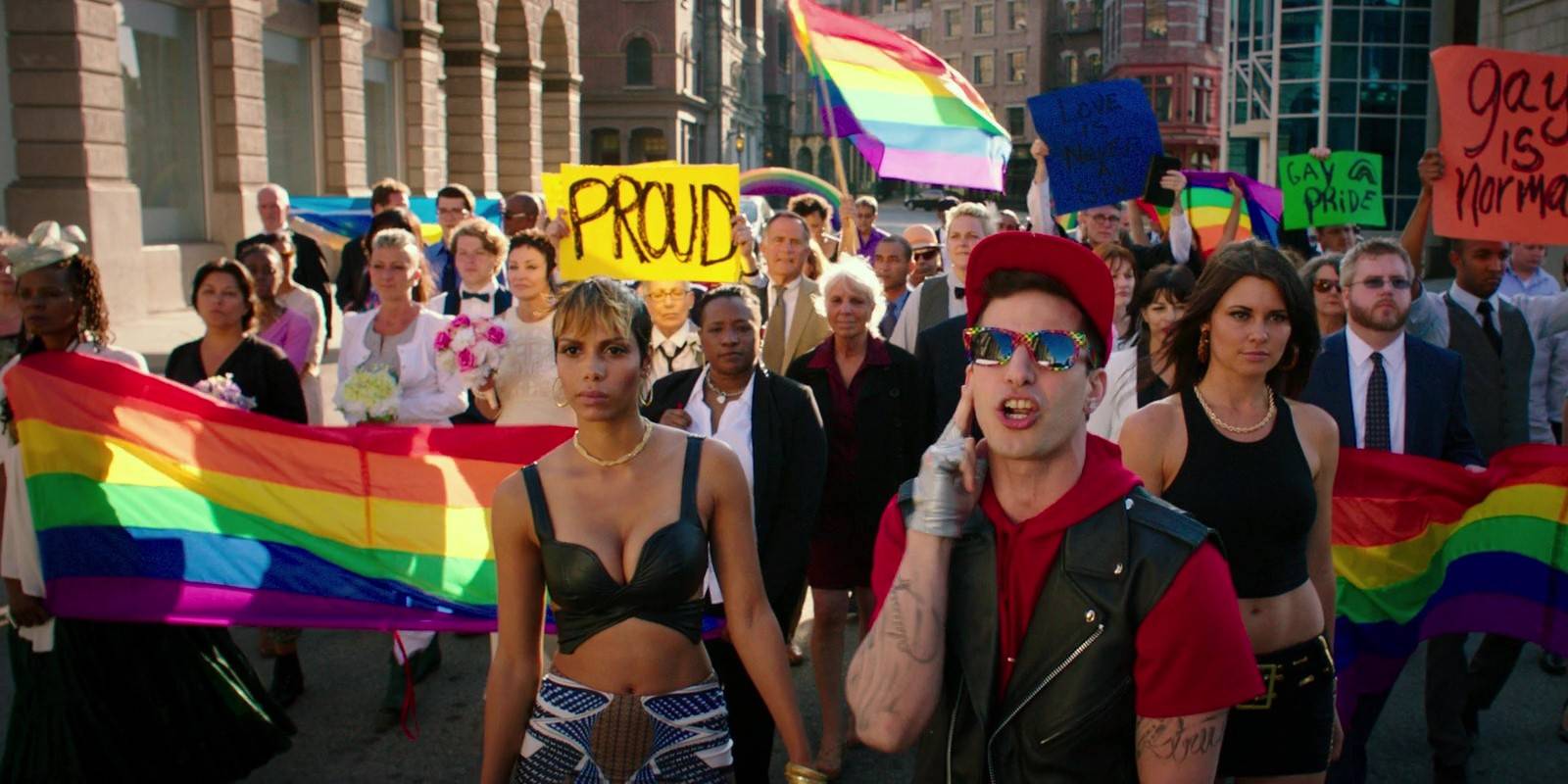
Andy Samberg, Akiva Schaffer, and Jorma Taccone, aka The Lonely Island, have created some incredible comedy skits in recent years, and there’s only one complaint I have about their feature film Popstar: Never Stop Never Stopping – it’s a movie that needed a sequel but never got one. It parodies the making-of-album documentaries that are popular in the music industry.
Popstar: Never Stop Never Stoppingfollows fictional pop star Conner4Real (Andy Samberg) during the promotional stage and the tour of his latest album. The song’s lyrics satirize facets of American culture, while Samberg’s exaggerated performance parodies the typical shenanigans of pop stars, from co-opting political causes to being obnoxiously ignorant. The film’s self-awareness hilariously contrasts with Conner’s lack of self-awareness.
A Mighty Wind (2003)
Christopher Guest has directed three brilliant mockumentaries in his career, and even the weakest of them is a joyride for fans of musical comedy. A Mighty Wind is not as funny as his two other films in the genre, but it’s the most poignant of the three, and despite its silliness, treats the subjects of death and legacy with sincerity.
After a man passes away, the three folk bands he used to manage at one point of time, none of which became as famous as they wanted, come together to put on a show in honor of him at the request of his son. The music is memorable, Fred Willard is as funny as ever and the story is heartwarming.
Borat: Cultural Learnings of America for Make Benefit Glorious Nation of Kazakhstan (2006)
Starting with its title, Borat: Cultural Learnings of America for Make Benefit Glorious Nation of Kazakhstan is a parody of political documentaries. Sacha Baron Cohen plays the titular Kazakh journalist Borat Sagdiyev, who goes to America to make a documentary. Through his experiences as a foreigner in the country, the film exposes the vapidity and hypocritical nature of American culture.
Cohen’s exaggerated performance of the simplicity of his character and the culture he represents, as well as the severe critique of America through the exaggerated display of prejudice and self-righteousness, caused controversy at the time of the film’s release. However, a legendary deleted scene I wish would have made it into the movie is its least objectionable and funniest scene.
Man Bites Dog (1992)
A man points a gun close to the camera in Man Bites Dog
The ability to find comedy in the bleakest of situations is often what distinguishes a good mockumentary from a found footage horror movie. While the two genres aren’t interchangeable and the distinction is often very apparent, Man Bites Dog blurs the lines to the point you realize, just like in any other storytelling medium, horror and comedy are deceptively similar.
A willing documentary crew follows a depraved serial killer, choosing not to intervene but just record his activities, thus actively becoming accomplices. Despite the bleak storyline, Man Bites Dog has a fantastic, wry sense of humor, from the serial killer’s musings and opinions to the observation crew’s gradually changing behavior. It stays funny throughout, even as morality is gradually compromised.
Real Life (1979)
The farcical nature of reality TV is thinly veiled behind moderately compelling drama, quirky character traits, and an abundance of staged interventions that aim to make reality shows more realistic. The performative nature of the medium is apparent, but the lack of acknowledgment from those involved and the manufactured sense of realism convincingly afford viewers the space to get invested.
Or perhaps, audiences are willing to ignore the transparent hints that would otherwise ruin their immersion, because the fabricated farce has just the right amount of drama for them to care about it while thinking of it as real. The insufferably egotistical performance by Albert Brooks interrogates the medium’s effectiveness in reproducing reality while questioning its intentions in Real Life.
Waiting for Guffman (1996)
Christopher Guest’s first mockumentary film is set in the already highly performative world of musical theater. It follows director Corky St. Clair, played by Guest himself, and his ragtag group of performers, who go overboard in their presentation during a staging of their musical play when they learn that a Broadway agent, the titular Mort Guffman, will attend the performance.
A situational comedy in the truest sense of the word, Waiting for Guffman isn’t a punchline-heavy film, but one that will make you laugh till your belly hurts through the goofups and tomfoolery of the crew whose desperation to make it big makes them caricaturish. This masterpiece of a comedy movie remains a hidden gem, even in Guest’s decorated filmography.
A Hard Day’s Night (1964)
The Beatles running down a street in A Hard Day’s Night
What’s better than a documentary about the Beatles? Director Richard Lester says a mockumentary about them trying to avoid their fans. A hilarious action-packed adventure film starring the four famous members of the band, A Hard Day’s Night follows the Beatles on a particularly testing day as they run against a ticking clock to make it to a scheduled performance.
A Hard Day’s Night is among the best music parody movies, as it effortlessly caricatures the very fans it’s meant for. Through its hilariously over-the-top plot of Ringo getting arrested and the band being held up by pursuing fans and relentless members of the press, it effectively parodies the pervasive nature of fandom in the world of rock and roll.













0 Comments