Alien: Earth – Meet the 5 Alien Species Terrorizing Earth
Warning! This article contains SPOILERS for Alien: Earth season 1, episode 5.Alien: Earth centers around five alien lifeforms that crash-landed on Earth, and we finally have real information about the majority of them. Alien: Earth begins with the USCSS Maginot, a Weyland-Yutani research vessel that crash-lands on Earth while carrying five alien specimens. One of these is the well-known Xenomorph, but the other four are entirely new to the Alien timeline.
We know some general information about all of the species in Alien: Earth thanks to the Maginot‘s mission. The Maginot was sent on its research mission 65 years prior to Earth, which takes place in 2120. That means they’re from distant reaches of the galaxy, and that they’ve been in containment for years leading up to the series and their escape from the ship.
As Alien: Earth has progressed, it has revealed bits of information about each of the specimens the Maginot was carrying. After Alien: Earth episode 5, we finally have enough information to identify all five new species in the show and provide some amount of concrete information about the lifeforms. Now, you can meet the aliens terrorizing everyone in Alien: Earth.
Xenomorph
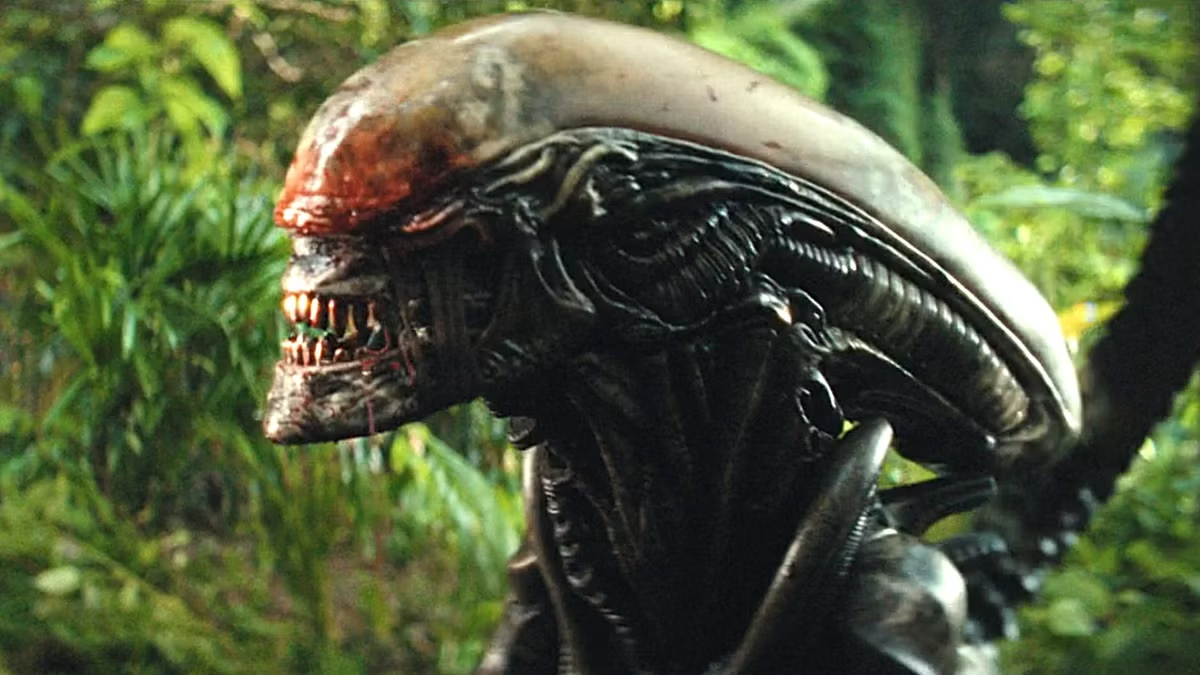
A Xenomorph from Alien Earth
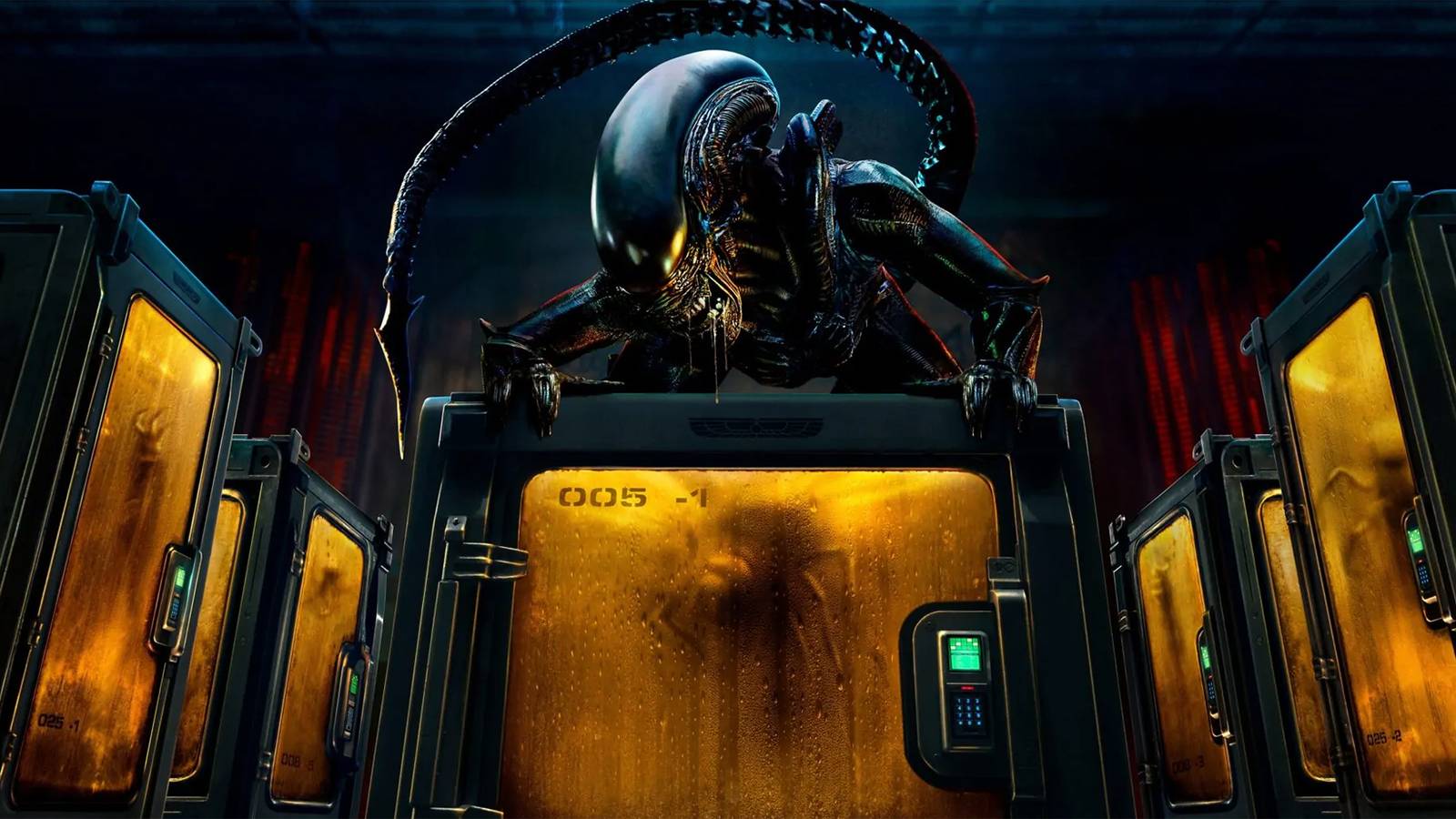
First and foremost, Alien: Earth is most interested in the iconic Xenomorphs. Xenomorphs have been the main antagonists of the Alien franchise since 1979 and the original Alien movie. As such, we have a wealth of information about them thanks to the seven canon Alien movies, a plethora of books, comics, and video games, and much more.
Even after 46 years, the origins of the Xenomorphs remain unknown and divisive. Prometheus and Alien: Covenant hinted that the Xenomorphs were created either by a race of super-intelligent aliens known as the Engineers or by a rogue synthetic named David. Alien: Earth, however, asserts that the Xenomorphs long predate David and his experiments, though it doesn’t offer an alternative explanation for their origins.
Regardless of origin, the Xenomorph life cycle is extremely well-documented, if not entirely clear. Xenomorphs begin life as an ovomorph, an egg. A facehugger is then born, which attaches itself to a living host (usually humans) and embeds a proto-creature into their chest cavity. When the larva develops enough, it erupts from the host as a chestburster, eventually growing into a Xenomorph drone.
Later Alienmovies established more variant types of Xenomorphs. Aliens features several warriors and a queen, which lays the ovomorphs that spawn new Xenomorphs, for example. The type of creature a facehugger impregnates also impacts what kind of Xenomorph will be born, as evidenced by the runner in Alien 3.
We also have a wealth of information about Xenomorph biology. Xenomorphs have acidic blood that is capable of melting through metal. They also have a secondary jaw that they can propel from their main mouths with enough force to punch through metal. More broadly, they have black skin, oblong, eyeless heads, and spiked tails used for hunting.
Interestingly, “Xenomorph” is not actually the official name of the Xenomorphs. The term is a general one used to describe any extraterrestrial life, but it was popularized by James Cameron’s Aliens until it became synonymous with the franchise’s main predatory aliens. Their technical Latin name is Linguafoeda Acheronsis.
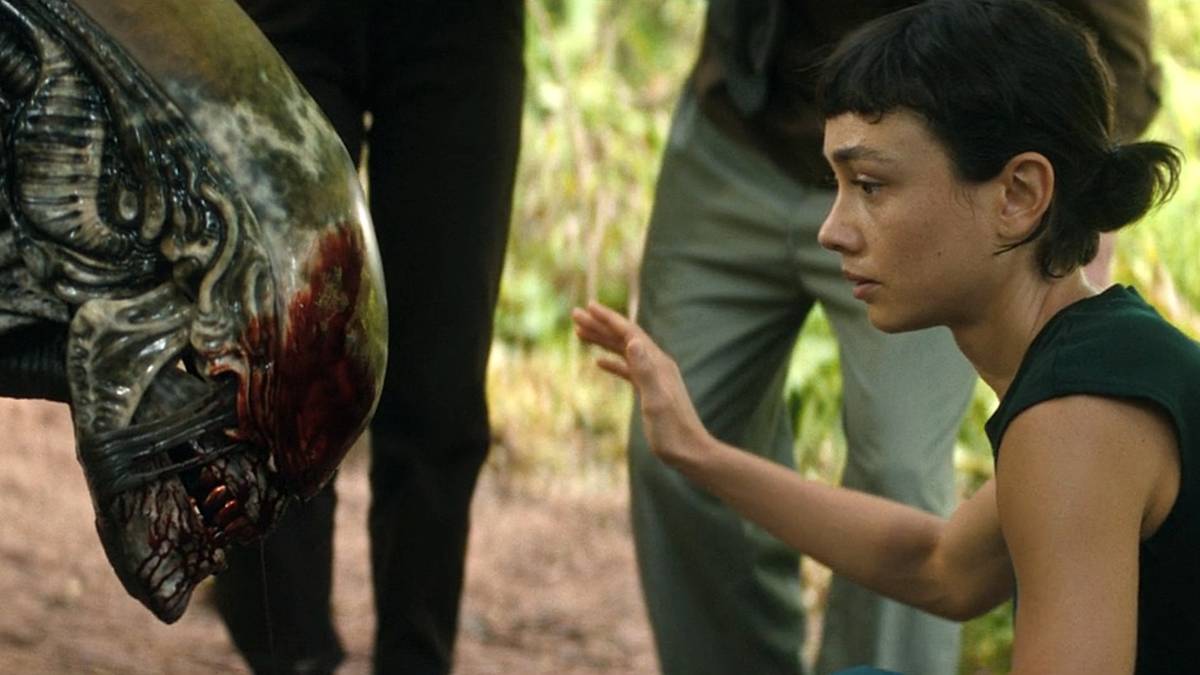
Alien: Earth also introduced some new information about Xenomorphs. Morrow alleged that Xenomorphs “see” by detecting fear, presumably through pheromones. Alien: Earth episode 3 also demonstrated that facehuggers lay a tadpole-like larva into hosts. Later episodes established that Xenomorphs have their own language that Wendy could decipher, though Alien: Earth‘s canon status may make this a moot point.
Behaviorally, Xenomorphs are apex predators. They stalk their prey using stealth and powerful grips that let them climb up walls and along ceilings. They also seem to understand – to some degree – the power of fear, as Xenomorphs often toy with their prey before consuming or cocooning them to be incubated. As such, Xenomorphs will often drool on or screech at their prey.
Species 19
A tick-like alien lifeform crawling on a Prodigy soldier’s face in Alien: Earth season 1, episode 1
The first novel species Alien: Earth properly introduced was a tick-like organism known to the crew of the USCSS Maginot as Species 19. As seen in Earth‘s premiere, Species 19 fed off the blood of live animals like humans, often siphoning off enough blood to leave a withered, dry corpse behind. Under starvation conditions, Species 19 would also feed on dead animals.
Alien: Earth episode 5 established quite a bit of information about Species 19. As shown in the episode, Species 19 was intelligent enough to distract the Maginot‘s science officer, Chibuzo, while another specimen unlatched their container and escaped. It then proved that it’s capable of excreting tadpole-like offspring from its thorax, and that those offspring can survive in water.
If the offspring of Species 19 enters a living host, it latches onto a vein or artery within them. After feeding enough, the aliens will then emerge from the body and search for a new food source. Chibuzo and Rahim’s attempts to remove the tadpoles then showed that Species 19 could produce a cloud of poison gas in emergencies that would cause humans to bleed from their eyes and suffocate.
Alien: Earth also included some miscellaneous details about Species 19. The alien is capable of spinning a spider-like web, though the purpose of these webs is unclear. They also have some level of awareness and even possibly the ability to be actively deceptive, as they were able to trick Chibuzo and draw attention away from the larvae in her water bottle.
T. Ocellus/Species 64
Arguably the most interesting new alien lifeform in Alien: Earth has two names: T. Ocellus and Species 64. Visually, T. Ocellus resembles a large eyeball with multiple pupils and octopus-like tentacles it uses for transportation. It’s also capable of moving its pupils into a single point, providing multiple images from the same point of view.
The most interesting feature of T. Ocellus is its behavior: T. Ocellus gouges out the eye of a prospective host and burrows into its eye socket before using its tentacles to take over the host’s optic nerve and brain. Once it does that. T. Ocellus takes control of the host’s brain and motor functions, effectively turning it into a zombie. So far, we’ve seen this process done to cats, sheep, and humans.
According to Kirsh, T. Ocellus displays a remarkable, almost human-like level of intelligence. It’s capable of problem-solving and concentration both with and without a host’s brain to utilize. As seen in episode 5, T. Ocellus could manipulate its environment and was even able to destroy its container and escape without help from the Maginot‘s saboteur.
T. Ocellus’ intelligence also makes it one of the most mysterious specimens in Alien: Earth. As seen on board the Maginot, T. Ocellus seemingly tried to warn Chibuzo that Species 19 had escaped containment. Later, after taking over Schmuel’s body, T. Ocellus actively engaged an adult Xenomorph in combat. It’s too early to tell definitively, but T. Ocellus may actually be aligned with humanity in Alien: Earth.
D. Plumbicare
D. Plumbicare, a plantlike alien species in Alien: Earth season 1, episode 2
Alien: Earth hasn’t revealed much information about the Maginot‘s fourth specimen, named D. Plumbicare, but there are some pieces that can be stitched together. D. Plumbicare is a plantlike alien species that resembles a large pod. It was first seen hanging from the ceiling, and it produced a long stamen it could seemingly use to manipulate its environment.
While we haven’t seen D. Plumbicare in action much, the Maginot‘s files briefly revealed some information about it. Thanks to those files, we know that D. Plumbicare is carnivorous and lures prey into the range of its stamen before pulling them into the main pod structure of its body. Then, like a venus flytrap, it kills its prey via asphyxiation, dissolution, or exhaustion before eating the corpse.
Alien: Earth Release Schedule
Episode Title
Release Date (Tuesdays @ 8 p.m. ET)
Neverland
August 12
Mr. October
August 12
Metamorphosis
August 19
Observation
August 26
In Space, No One…
September 2
The Fly
September 9
Emergence
September 16
The Real Monsters
September 23
Unfortunately, that’s all we currently know about D. Plumbicare. Kirsh hypothesized that it may be an animal that simply appears plantlike, but he hasn’t conducted any additional experiments yet. Until Alien: Earth can revisit it, D. Plumbicare will remain shrouded in mystery.
Unnamed Beetle-like Lifeform
Boy Kavalier (Samuel Blenkin) investigating a beetle-like alien lifeform in Alien: Earth season 1, episode 3
The last and least documented alien lifeform in Alien: Earth is a yet-unnamed beetle-like lifeform. None of the Maginot‘s visible files reference the beetles, and they can only be seen during a brief shot of Boy Kavalier investigating Kirsh’s lab. It seemed that they had wings that could be retracted into their bodies, like a beetle, but little else is known definitively about them.
Still, we can speculate about the species. The presence of wings all but guarantees they’re capable of flight. We don’t know anything about their behavior or diet, but it’s safe to assume they’re either hostile or carnivorous, given the horror aspects of Alien: Earth. It can’t be clearly seen, but the beetles may also be able to spit acid or another type of unidentified green liquid.
Unfortunately, speculating beyond those basic assumptions would be fruitless. Alien: Earth simply hasn’t showcased the beetle-like species enough to draw any conclusions or even many educated guesses. Until Alien: Earth gets around to its lesser-developed alien lifeforms, they’re going to remain largely unknown.











0 Comments