9 Action Animated Series That Outmatch Arcane in Fight Choreography
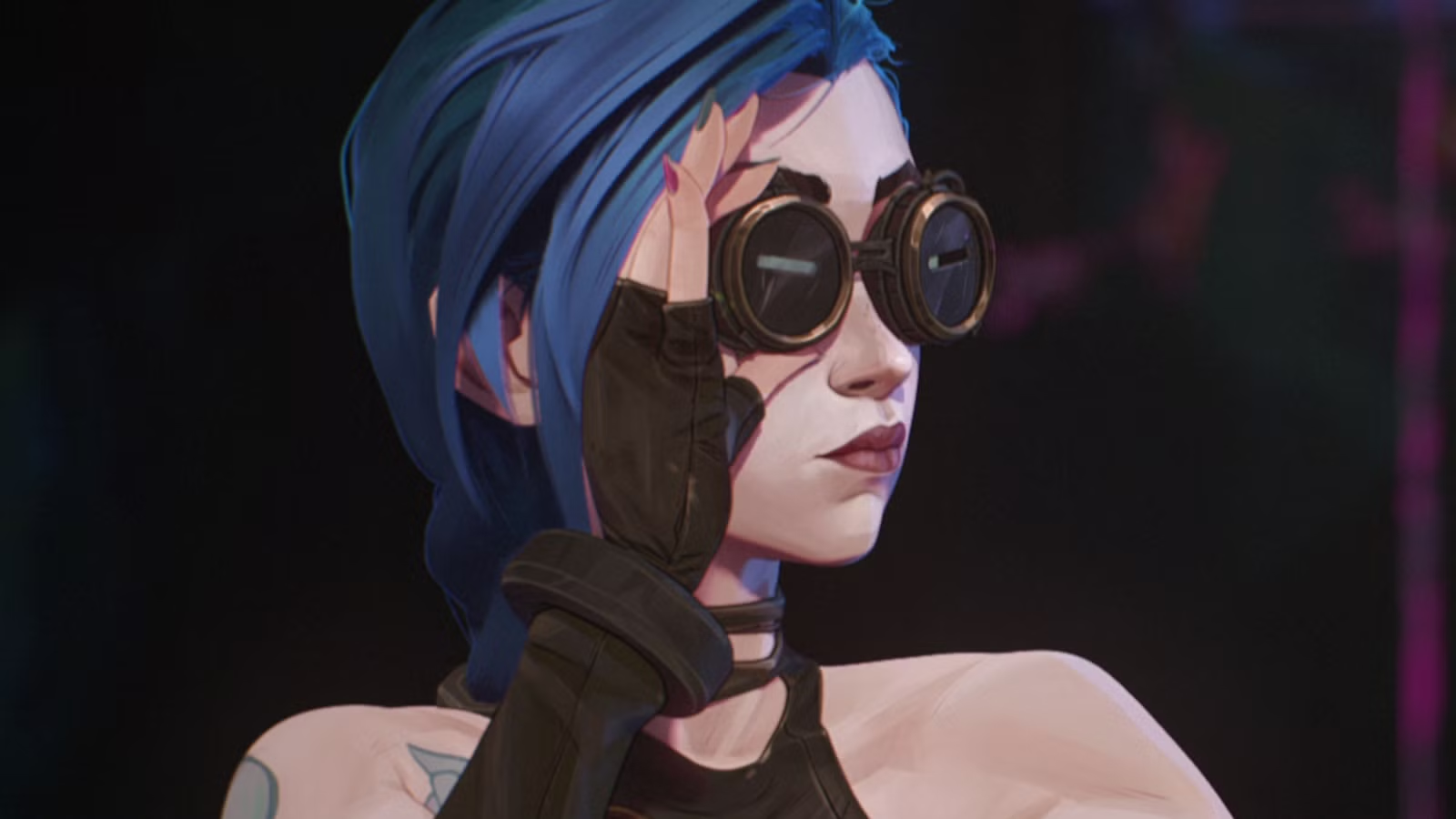
From the moment Arcane burst onto Netflix, it set a new gold standard for animated television. The League of Legends adaptation dazzled audiences with its painterly visuals, emotional storytelling, and dynamic fight choreography. Yet for all its brilliance, Arcane isn’t untouchable – and it certainly isn’t the only animated series redefining action.
Action and animation have gone hand-in-hand for decades, particularly on TV. Animation has always provided fertile ground for high-stakes combat and visually impossible sequences. While Arcane channeled that energy into jaw-dropping duels like Vi’s (Hailee Steinfeld) brutal showdown with Sevika (Amirah Vann), other series have been bending the rules of motion and intensity long before Piltover ever hit the screen.
When it comes to artistry, voice acting, and narrative depth, Arcane may remain in a class of its own. However, when measured purely by kinetic spectacle and inventive fight choreography, there are several contenders that outmatch it – shows that deliver action sequences even Arcane’s animators might envy.
Star Wars: Clone Wars (2003-2005)
Hyper-Stylized Animation Makes Every Battle Feel Mythic
Before The Clone Wars CG series, Genndy Tartakovsky’s Star Wars: Clone Wars brought the galaxy far, far away to life with intense, kinetic energy that rivaled any live-action Star Wars movie. The show’s use of minimalist design and exaggerated motion created action that was both epic and operatic.
Where Arcane thrives on emotional tension and weighty choreography, Clone Wars is pure visual storytelling. Characters like Anakin Skywalker, General Grievous, and Mace Windu move like living myths, captured in sequences that feel like animated brushstrokes of power and precision.
It’s this fluidity that arguably makes Clone Wars one of the few better shows than Arcane in terms of raw visual momentum. Every lightsaber duel explodes with creativity, and every frame feels like it could hang in a gallery. Tartakovsky didn’t just animate Star Wars – he weaponized it.
X-Men ‘97 (2024-Present)
Cinematic Team Battles Make Superhero Animation Soar Again
Storm getting her power back in X-Men ’97
X-Men ‘97 resurrects a ‘90s classic with modern visual flair and storytelling ambition. Picking up where the original X-Men: The Animated Series left off, the revival amps up the action to blockbuster levels – turning every mutant clash into a sweeping, cinematic event. It’s the perfect blend of an animation style rooted in Saturday morning cartoons with the scale and scope of a modern hit like Arcane.
Arcane may dazzle with its tightly choreographed one-on-one fights, but X-Men ‘97 thrives on teamwork and scale. Its battles unfold across entire cities, with power sets colliding in kinetic harmony. Moments like Storm (Alison Sealy-Smith) conjuring lightning while Magneto (Matthew Waterson) manipulates steel around her are coordinated animated chaos at its most thrilling.
The show’s updated animation style also lends its fights a painterly richness that rivals Arcane’s aesthetic beauty, but with more urgency and fluidity. When mutant powers erupt across the screen in arcs of light and motion, X-Men ‘97 proves that when it comes to large-scale skirmishes involving powered heroes, even Arcane struggles to keep up.
Invincible (2021-Present)
Unrestrained Brutality Gives Superhero Animation An Emotional Punch
Invincible’s fight scenes don’t hold back, and the Amazon Prime Video animated show is all the better for it. Based on Robert Kirkman’s comic series, the series takes the superhero genre’s familiar city-smashing tropes and turns them into a masterclass in visceral storytelling. When Omni-Man (J.K. Simmons) fights, every punch feels catastrophic.
Unlike Arcane’s ballet-like precision, Invincible revels in chaos. Its action isn’t just about spectacle; it’s about impact. The now-infamous “Think, Mark!” sequence in the finale of season 1 redefined what animated violence could communicate emotionally. It’s not pretty – it’s painful, deliberate, and haunting.
Arcane excels in artful restraint, but Invincible trumps it by diving into untethered savagery. The show’s fights are more than brutal set pieces; they’re emotional crucibles that push its characters to their breaking points, making its action scenes some of the most unforgettable in modern animation.
Demon Slayer (2019-Present)
Breathtaking Animation Turns Swordfights Into Pure Art
Tanjiro in Demon Slayer Episode 19
Few anime – or shows, period – can match the sheer visual intensity of Demon Slayer. Every battle between Tanjiro Kamado and the demonic threats he faces feels like a painting in motion. The Water Breathing techniques alone are stunning, transforming slashes into swirling waves of light and color.
Arcane may have skill at blending emotional storytelling with stylized realism, but Demon Slayer takes action to an entirely new aesthetic plane. Studio Ufotable’s signature digital effects make each confrontation feel both cinematic and mythic. For example, when Rengoku battles Akaza in season 2’s “Set Your Heart Ablaze”, the fluidity and emotional weight eclipse nearly any fight Arcane offers.
However, it’s not just the visuals – the choreography, pacing, and emotional stakes work in harmony. Every strike feels personal, every movement meaningful. For action that’s as much an art form as a fight, Demon Slayer stands as one of the few truly better shows than Arcane.
Blue Eye Samurai (2023-Present)
Swordplay Choreography That’s Unmatched In Precision And Artistry
Blue Eye Samurai slices through the competition with breathtaking precision. The tale of Mizu (Maya Erskine), a mixed-race samurai seeking vengeance, delivers some of the most fluid and emotionally charged action ever animated. Every swordfight unfolds like a deadly ballet.
Arcane’s unique style makes every scene look like a painting in motion. Blue Eye Samurai takes a similar yet different approach, blending cinematic realism with stylized artistry. The camera moves with impossible grace, tracking blades that glint through cherry blossoms or rain-soaked courtyards.
It’s not just beautiful, it’s brutal too. Each fight carries the emotional weight of Mizu’s journey, with silence and tension weaponized as powerfully as any strike. Few shows choreograph combat with such deliberate rhythm, making Blue Eye Samurai not only one of the best action series on TV, but easily one of the better shows than Arcane when it comes to pure, choreographed mastery.
Castlevania (2017-2021)
Gothic Violence And Fluid Animation Redefine Medieval Combat
Netflix’s Castlevania may have paved the way for Arcane, but in terms of sheer ferocity, it still reigns supreme. The saga of Trevor Belmont (Richard Armitage), Sypha (Alejandra Reynoso), and Alucard (James Callis) drips with gothic atmosphere and acrobatic, spell-laced warfare.
Arcane delivers stunning duels, but Castlevania’s fights are symphonies of blood and motion. From Trevor’s whip-wielding showdowns to Sypha’s fiery spellcasting, the choreography feels almost musical – a violent dance where timing and flair are everything.
Its animation pushes 2D art to its limits, marrying baroque visuals with kinetic intensity. When the trio faces off against hordes of vampires in the series finale, the sheer fluidity and scale of movement rival any of Arcane’s most polished sequences. In terms of medieval fantasy combat, Castlevania remains unmatched.
Alchemy-Based Combat Blends Intellect With Intensity
Fullmetal Alchemist: Brotherhood remains a cornerstone of animated action storytelling – and for good reason. Edward and Alphonse Elric’s battles combine strategy, science, and speed in ways few series can match. Every skirmish is a puzzle of alchemical precision, unfolding with mind-bending creativity.
It can’t be denied that Arcane excels in emotional depth and visual design, but Brotherhood integrates both seamlessly into its fight choreography. Transmutations occur mid-battle, turning the terrain into a weapon or a shield – a visual rhythm that keeps combat constantly inventive. The duel between Mustang and Lust remains one of anime’s most thrilling sequences, balancing intensity and intellect perfectly.
Unlike Arcane, where action often mirrors character conflict, Brotherhood fuses the two entirely. The fights are not just physical; they’re extensions of belief systems, ideologies, and personal guilt. In balancing brains and brawn so flawlessly, Fullmetal Alchemist: Brotherhood sets a bar for animated action that even Arcane can’t quite reach.
Samurai Jack (2001-2017)
Minimalist Storytelling Makes Its Action Transcend Time
Genndy Tartakovsky’s Samurai Jack remains a timeless masterpiece of animated action. With near-silent sequences and stark imagery, Jack’s (Phil LaMarr) battles are more than fights – they’re meditations on movement, purpose, and perseverance.
The contrast between Arcane and Samurai Jack couldn’t be starker. Arcane is lush and detailed, Samurai Jack finds beauty in simplicity. Every frame is meticulously composed, using color and silence to amplify tension. Its minimalist art direction turns every slash of Jack’s sword into poetry in motion.
Few shows manage to combine spiritual depth with relentless action so seamlessly. Whether Jack is dueling robots in a desert or demons in the dark, his grace and determination elevate animation to art. In its precision and elegance, Samurai Jack stands as one of the few truly better shows than Arcane in the realm of animated combat.
Avatar: The Last Airbender (2005-2008)
Elemental Martial Arts Deliver Both Beauty And Balance
Suki Avatar the Last Airbender “Appa’s Lost Days”
Avatar: The Last Airbender remains the blueprint for emotionally resonant action animation. The show’s bending styles – each rooted in real martial arts – make every battle feel grounded and expressive. For example, Zuko and Azula’s final Agni Kai remains one of the most breathtakingly choreographed duels in TV history.
Arcane may excel at cinematic scale, but Avatar’s strength lies in clarity and philosophy. Every movement, from Katara’s (Mae Whitman) fluid waterbending to Toph’s (Jessie Flower) seismic strikes, communicates emotion and identity.
Its action isn’t just about who wins – it’s about harmony, struggle, and growth. Avatar turned combat into conversation, something Arcane often hints at but never fully achieves. Even two decades later, few shows can match its combination of storytelling, choreography, and soul.






0 Comments