Warning: This article contains a reference to suicide.
The Western genre is famously unpredictable when it comes to ending TV shows. Many classic Westerns like Gunsmoke and Rawhide were canceled before their showrunners had the chance to give them a proper finale, meaning their last episodes are decidedly underwhelming. On the other hand, certain series in the genre feature some of the greatest endings in TV history.
It isn’t always those shows considered the small screen’s best Westerns that offer up the greatest finales, either. Some of the most satisfying climaxes across the genre come from series we wouldn’t necessarily include in the top tier of small-screen Westerns.
Meanwhile, generation-defining shows like Yellowstone might be wildly popular overall, but their final episodes have proven divisive among fans and critics alike. It’s a rare TV Western that manages to finish in fitting style, resolving its story in a way that’s both crowdpleasing and credible.
While any list of the greatest Western movie endings will be rich with picks spanning the breadth of the genre and almost a century of filmmaking, perfect Western TV endings are much harder to come by, and even worthier of special attention as a result. In fact, only a couple of classics from the genre’s early days make this list.
Godless
An Epic Final Gunfight
Netflix’s Godless is a criminally underrated Western miniseries about a fictionalized version of La Belle, New Mexico, an Old West town in which women make up most of the population following an accident at the local mine where many of the men worked. When Jack O’Connell’s young outlaw Roy Goode rides into La Belle, he inevitably brings trouble with him.
The final episode of Godless centers on the climactic showdown between the women of La Belle, and the Griffin Gang from whom Roy is fleeing. This showdown sparks the most ferocious and spectacular gun battle in any contemporary small-screen Western. The real heroes of the series go down in a blaze of glory to repel the villains successfully.
The Big Valley
Jarrod’s Quick Thinking Saves Victoria Barkley
Barbara Stanwyck with a horse and the cast of The Big Valley
In the final full decade of her screen career, Barbara Stanwyck became one of the greatest Western TV actors of all time, with her formidable ranching matriarch Victoria Barkley in The Big Valley among the genre’s foremost roles in the late 1960s. In arguably the most suspenseful TV ending of its day, Barkley almost loses her life in The Big Valley’s final moments.
Two brothers hold Stanwyck’s character responsible for the execution of their father, as it was her testimony that secured his conviction. Victoria Barkley seems certain to die when both brothers ambush her at home with pistols at the ready.
Just in time, her son Jarrod happens to overhear the commotion they cause, and gets the better of them both in a shootout using an ingenious clothes-stand decoy. This thrilling ending to the four-season Western series combines genuine peril with an exhibition of sharpshooting set-piece mastery.
1883
A Moving Origin Story
James Dutton holds Elsa as she dies in 1883’s finale.
There seems to be a running theme of women dying young in the Yellowstone franchise, and this prequel miniseries is no exception. However, in 1883, the death of Elsa Dutton is an appropriately tragic ending, reflecting the extent of the hardship the family has to endure en route to their future homestead in Montana.
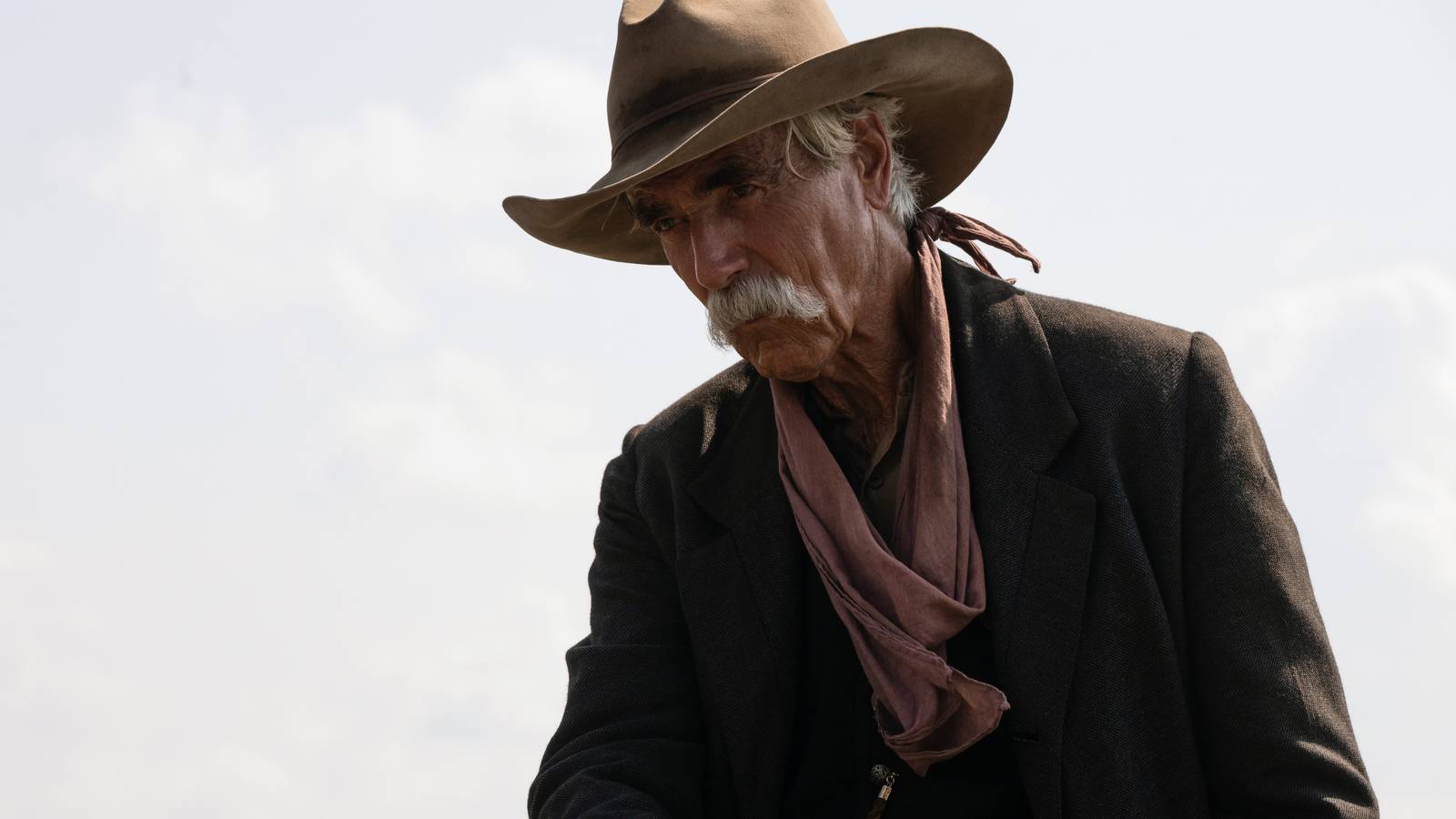
She isn’t the only main character to die in the show’s agonizing finale episode, either, as Sam Elliott’s Shea Brennan commits suicide having fulfilled his final promise to his wife that he’d reach the Pacific Ocean. He has nothing else to live for, and is still suffering from the traumas he’s endured on his journey across the continent.
While 1883’s ending is anything but happy, it feels thoroughly true to the show. What’s more, it does contain the seeds of a more hopeful future.
We see a leader of the indigenous Crow tribe point the Dutton family towards the place that will become their home for more than a century. At the same time, he divines the prediction that the land will one day be returned to the tribe, as it is during Yellowstone’s finale.
Longmire
Walt Names His Successor
Longmire for sheriff sign in Longmire season 1 episode 1
Walt Longmire is arguably the best sheriff in TV Westerns, but even he has to give up the ghost eventually, as the show’s fitting finale episode demonstrates. It turns out that Walt was only reluctant to retire because he didn’t trust any of his fellow Absaroka County police officers to replace him.
In a poetic twist that’s delivered in the beautifully understated manner we’ve come to associate with the series and its central character, he surprises his daughter Cady by naming her as his successor. Even though Cady doesn’t work for the police, she knows the law better than anyone else in the county, and has Walt’s full confidence.
We don’t see this surprising turn of events coming, but it makes perfect sense, in its own roundabout way. So, Absaroka County will continue to be the law enforcement domain of a Longmire, even after Walt’s finally hung up his gun and been put out to pasture.
Hell On Wheels
From West To East
Anson Mount as Cullen Bohannon in Hell on Wheels.
Years before his tenure as Star Trek’s Christopher Pike in Strange New Worlds began, Anson Mount’s breakout role came in Hell on Wheels. The five-season TV Western sweeping tale about the construction of the Union Pacific Railroad, and the hellish realities that came with this enormous undertaking for those directly involved in it.
The show’s conclusion may be predictable, given the historical basis for its story, but that doesn’t make it any less powerful or gratifying. Every main character in the story gets their due, and three of its central figures, Mickey McGinnes, Eva, and Anson Mount’s Cullen Bohannon, head out as far West as they can go.
In Cullen’s case, he ends up going even further than the Pacific Coast of the United States. He takes a boat from San Francisco to China in search of his lost love, Mei, a laborer he met while she was working on the railroad of the show’s title.
This emotionally-charged epilogue to the personal stories we’ve followed throughout the series is everything we could possibly want for its ending. The process of constructing the Union Pacific Railroad might have been a nightmare, but it gave rise to some touching and unexpected personal bonds.
The Guns Of Will Sonnett
A Shootout In Samson
Walter Brennan as Will Sonnet in The Guns of Will Sonnett
The Guns of Will Sonnett’s title star Walter Brennan won three Oscars in five years, three decades before this TV Western aired, and his powerhouse lead performance in the show is worthy of such exceptional acting credentials. The series is one of the few examples of a classic Western which ends on a perfect note.
Brennan’s character, his son, and his grandson are forced to face off in a deadly duel with a group of gunslingers. They successfully draw first and shoot their adversaries dead, before articulating profound pieces of insight into the psychology of a sharpshooter.
Having demonstrated their abilities with a pistol, the three Sonnetts are hired to maintain law and order in the town where the duel occurs, which goes by the name of Samson. It feels only right that Will can’t help but take up another sheriff position, two years after his retirement. This way, Samson can be safe for good.
Lonesome Dove
“A Man Of Vision”
Lonesome Dove is one of the few Western TV shows that are perfect from start to finish. The 1989 miniseries ends with Tommy Lee Jones’ character, former Texas Ranger Captain Woodrow F. Call, being harried by a reporter about his legendary exploits with Gus McCrae and Jake Spoon.
The reporter’s suggestion that Call is “a man of vision” ushers in a heart-rending montage of the show’s characters and events, enacting Call’s visions of his own memories. He has tears in his eyes as he sardonically affirms the reporter’s suggestion. This conclusion feels like the best imaginable goodbye for Call, and for this peerless series in its entirety.
Justified
“We Dug Coal Together”
Release Date
2010 – 2015
Directors
Adam Arkin, Jon Avnet, Peter Werner, Bill Johnson, John Dahl, Michael W. Watkins, Dean Parisot, Gwyneth Horder-Payton, Tony Goldwyn, Don Kurt, Michael Katleman, Billy Gierhart, Frederick King Keller, John David Coles, Lesli Linka Glatter
Writers
Fred Golan, Taylor Elmore, Ingrid Escajeda, VJ Boyd
As tearjerking endings to Western TV shows go, they don’t come more emotional than Justified’s final moments. In the final scene of the series, U.S. Marshal Raylan Givens visits his nemesis Boyd Crowder in prison, after putting him behind bars. He’s there to tell Boyd – falsely – that their mutual love interest is dead.
In this way, Raylan the convict’s painful search for his missing wife. When Boyd asks Raylan why he would travel thousands of miles to give him this news in person, he soon figures out the answer himself. Boyd’s final line, “We dug coal together,” is Justified’s most famous for a reason.
The line is an emotional gut-punch, reflecting the deep-rooted respect these two adversaries have for each other, after all that they’ve been through together. Justified was already the greatest neo-Western TV show of all time before this moment, but this ending sealed the deal.





0 Comments