10 Fantasy Series That Outshine The Rings of Power
Prime Video’s The Rings of Power launched with major aspirations to redefine televised fantasy by reviving Tolkien’s first age of heroes, yet its reach often outpaced its rhythm. The show’s scale is enormous; it’s one of the most gorgeous fantasy shows ever, but two seasons in, it’s still struggling to capture the true spirit of why we loved Peter Jackson’s The Lord of the Rings.
Develops Epic Worldbuilding With More Disciplined Political Realism
When King Joffrey ordered Ned Stark’s execution in season 1’s “Baelor,” Game of Thrones announced its worldview— that honor couldn’t survive politics. This horrific Game of Thrones death was proof that moral codes collapsed under systems built for ambition. The scene’s brutality ignited rebellion across the North and turned grief into governance, forcing the realm to evolve before it could mourn.
That same principle guided the Red Wedding in one of the best Game of Thrones episodes, “The Rains of Castamere.” Robb Stark’s broken oath invited the Freys’ revenge, and the massacre reshaped every alliance still clinging to order. Power shifted not through destiny but through the enforcement of human weakness, and while The Rings of Power stages war as prophecy fulfilled, Thrones made politics its prophecy, and consequence its only magic.
The Legend of Vox Machina (2022–Present)
Executes The Classic Hero’s Journey Better
Keyleth looking serious in The Legend of Vox Machina season 3
The Legend of Vox Machina treated heroism as something that had to be earned together, not inherited alone. The party’s early failures made their victories hit harder, from Percy’s pursuit of vengeance nearly destroying his friends, while Vax’s deal with Raven Matron in the Vox Machina season 3 ending forced him to choose between duty and family. Each setback redefined what courage meant, turning adventure into a constant negotiation of trust.
That process of becoming stood in sharp contrast to The Rings of Power, where heroism was bound to lineage and prophecy. Galadriel’s campaign against Sauron continued her brother’s unfinished war, and Isildur’s defiance of his father prefigured the myth he was destined to fulfill. In Vox Machina, greatness was built through imperfection and choice, while in Rings, it was assumed before anyone acted.
Carnival Row (2019–2023)
Constructs Fantasy Politics With Stronger Social Consequence
Carnival Row understood that fantasy becomes persuasive when power obeys structure. The show built its world on class, race, and immigration, where the oppression of fae citizens was bureaucratic. In the first season, Vignette’s internment and Philo’s secret heritage collided under a government that legislated cruelty, forcing love and identity to exist only through resistance. Every rule felt deliberate, and every rebellion revealed the cost of changing it.
Every LOTR kingdom in The Rings of Power gestured toward similar divisions between elves, men, and dwarves, yet those hierarchies rarely shaped behavior beyond exposition. Its conflicts unfolded across splintered territories where power operated in name only. Carnival Row tightened its lens until prejudice became policy, showing how fantasy sustains meaning when systems, not symbols, decide who survives.
Castlevania: Nocturne (2023–Present)
Tells Its Story With Clearer Focus And Purpose
Image via Netflix
Castlevania: Nocturne‘s timeline, set within the French Revolution, framed faith and class as twin weapons, forcing every victory to arrive already stained by loss. In the first season, Richter’s belief in his family’s legacy faltered when he learned of the trauma that powered it, and Annette’s magic—drawn from her history of enslavement—turned salvation into reckoning. Every fight mattered because it finished what conviction began.
That coherence separated it from The Rings of Power, where storylines scattered across continents and seldom converged into a single consequence. Nocturne’s rebellion always knew what it was fighting for, and each confrontation deepened its moral center instead of expanding its lore; and if season 3 is confirmed, Nocturne will likely continue its fantastic streak while Rings searches endlessly for significance.
The Wheel of Time (2021–2025)
Balances Ensemble Destiny Arcs With Clearer Rules And Progression
The Wheel of Time, while not without its many, many issues, rebuilt the idea of prophecy as something governed by structure. Its magic followed rules, its politics contained consequences, and its ensemble evolved through systems that held together even under pressure. When Moiraine lost her connection to the One Power at the end of season 1, her vulnerability redefined authority, showing that strength in this world depended on the rules it obeyed.
And by the time Rand confronted Ishamael in the season 2 finale, destiny no longer felt abstract—his journey as the Dragon Reborn was visible through every sacrifice that led there. The Rings of Power, by contrast, reached for similar heights but rarely clarified how its forces worked or what their limits were.
Not even the harsh realities of rewatching The Wheel of Time after it was canceled can disprove that clarity of the world’s mechanics sustained its ambitious run, giving epic storytelling the scaffolding that belief and faith alone can’t hold.
Good Omens (2019–2023)
Portrays Divine Conflict With More Personality And Warmth
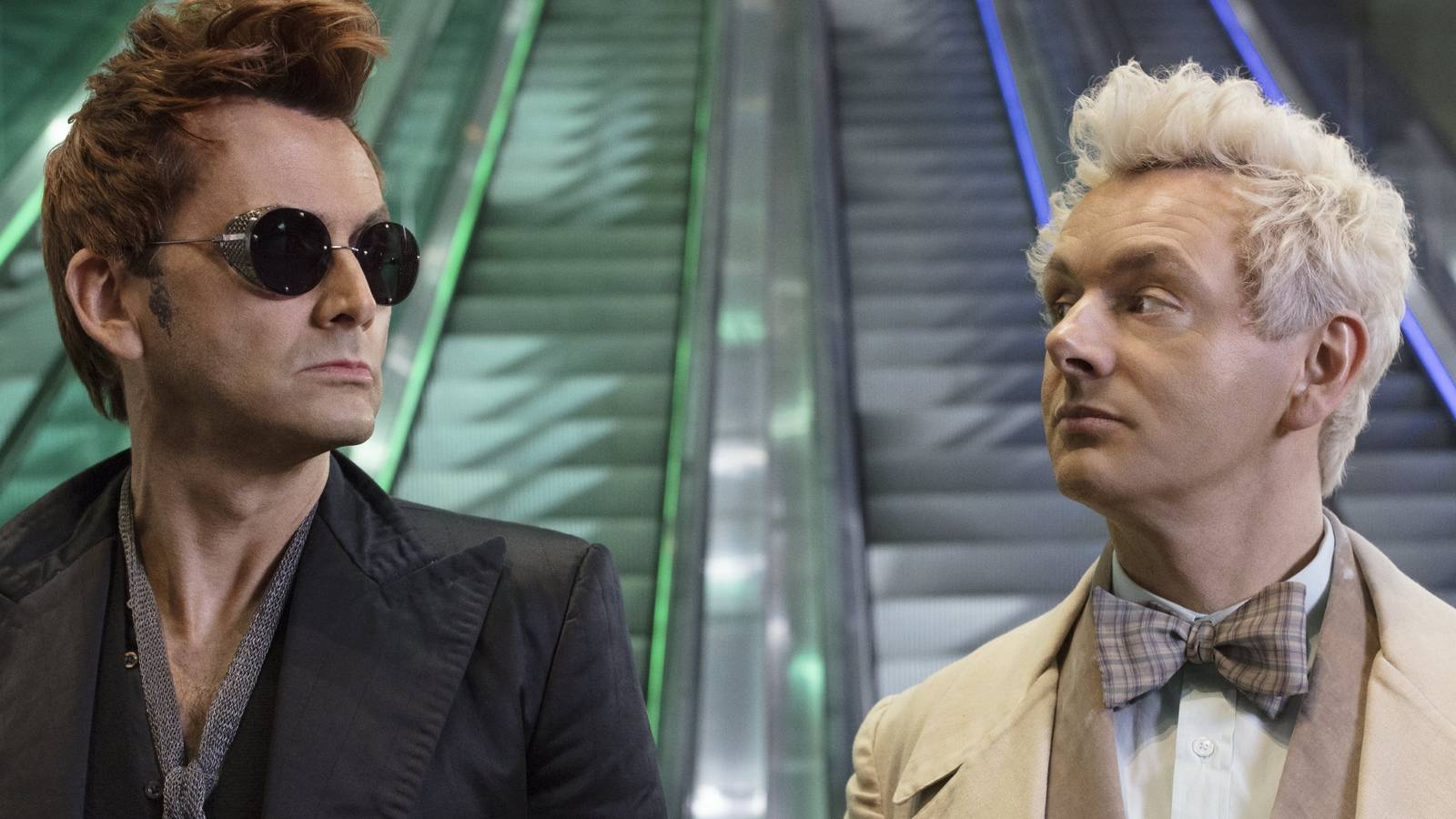
Crowley and Aziraphale looking at each other suspiciously in Good Omens
Good Omens treated the apocalypse as a test of friendship rather than one of faith, and that was the show’s biggest strength. The partnership between Aziraphale and Crowley grounded celestial conflict in small acts of affection—of an angel hesitating to smite and a demon choosing to protect. In season 2, their fragile alliance deepened into something tenderly human, and the apocalypse became less about judgment than about understanding.
Because Good Omens kept heaven and hell within conversational reach, giving its cosmic arguments the texture of companionship, the audience’s connection with supreme beings was more tangential. It certainly helps that the Good Omens cast was perfect—David Tennant and Michael Sheen are a literal match made in heaven. But Where Rings imagined virtue as these characters’ inheritance, Good Omens found it in empathy, reminding fantasy viewers that salvation always begins with a universal emotion the audience can latch onto.
The Dark Crystal: Age of Resistance (2019)
Pays Closer Attention To The World’s Ecological Logic
This show understood that fantasy only feels alive when its ecosystem makes sense. Every Skekis in The Dark Crystal: Age of Resistance, every ritual, and resource existed in delicate balance, and every imbalance created story. The Skeksis’ exploitation of the Crystal for eternal life was environmental collapse disguised as vanity, not some abstract evil, and when Deet absorbed the Darkening to restore Thra’s harmony, her heroism became biological, not symbolic.
The Rings of Power displayed similar grandeur but treated its landscapes as backdrops rather than organisms. Its mountains and forges glimmered with history yet often remained static, untouched by cause or cost. The Dark Crystal revealed how a world becomes ancient by behaving like a living system, one that decays, adapts, and remembers. Where Rings admired its terrain, and wanted us to by proxy, Crystal made the terrain itself the story.
His Dark Materials (2019–2022)
Explores Morality With Greater Religious Purpose
His Dark Materials built its world on the instability of belief. Within the show, every institution that claimed truth from religion, science, and prophecy, crumbled under its own need for certainty. In the first season, the Magisterium’s persecution of Dust turned theology into authoritarian control, and Lyra’s journey exposed faith as a human invention designed to limit discovery. Even rebellion carried guilt, because enlightenment arrived through loss.
By the His Dark Materials season 3 finale, when Lyra and Will severed the connection between worlds, salvation proved possible through the characters’ moral compassion. The Rings of Power treated morality as an inherited virtue caked into each species’ DNA—elves noble by design, evil written into shadow—while His Dark Materials forced meaning to earn itself through doubt and decision. It argued that truth isn’t granted from above, but built from the courage to question it.
The Witcher (2019–Present)
Handles The Destiny Trope With Stronger Confidence
Two women leaning their heads against each other as they embrace in The Witcher season 4Image via Netflix
The Witcher redefined destiny by making it a choice, not a chain of sequential events. Geralt’s bond with Ciri—born from The Witcher‘s Law of Surprise—grew into something that challenged the idea of prophecy itself, and across the first two seasons, every decision he made to protect her weakened destiny’s hold on both of them. Meanwhile, Yennefer’s struggle to regain her power mirrored that same rebellion against fate, turning magic into agency rather than inheritance.
The Rings of Power approached destiny as fulfillment, where Galadriel’s pursuit of Sauron continued a war she never chose and Isildur’s disobedience simply rehearsed a legend already written. Its prophecies created an inevitability that felt less meaningful compared to The Witcher, which used them to test each character’s conviction. In one world, characters built their future; in the other, they waited to live it.
House of the Dragon (2022–Present)
Executes Prequel Storytelling With Clearer Focus And Consequence
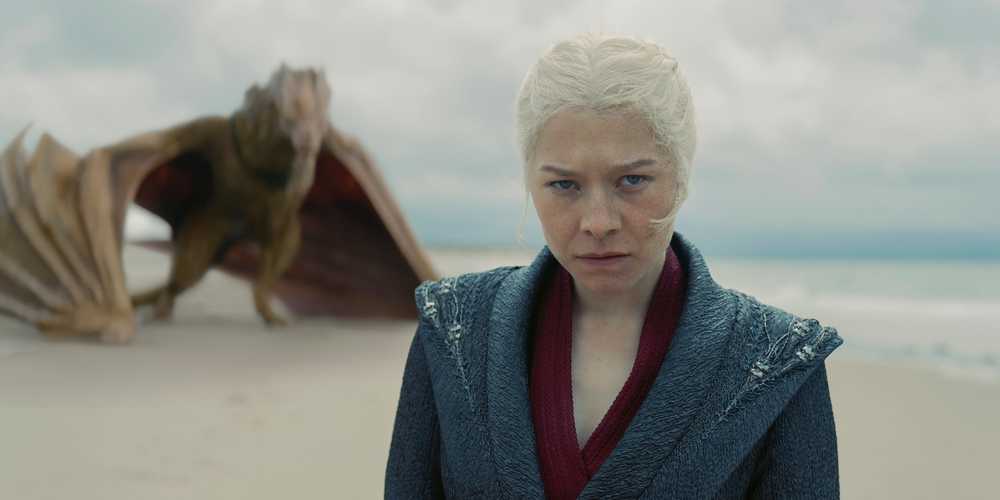
House of the Dragon remembered that a prequel’s purpose isn’t to explain the past but to dramatize how the future becomes inevitable. Each marriage, succession dispute, and quiet betrayal tightened the lineage that would one day birth Game of Thrones, like when Rhaenyra becomes queen in the season 2 premiere, knowing war would follow. Instantly, the series transformed ancestry into a tragedy where every decision deepened the history it would later complete.
The Rings of Power reached backward too, but it often treated history as a puzzle to decode rather than a chain of consequences to inhabit. Its timelines sprawled without converging, and its characters moved through a predetermined prophecy instead of shaping it. House of the Dragon, instead, showed that legacy carries power only when we feel its cost in real time. The past lived forward, and the future felt earned.
Release Date
September 1, 2022
Network
Amazon Prime Video
Showrunner
John D. Payne, Patrick McKay, Louise Hooper, Charlotte Brändström, Wayne Yip
Directors
J.A. Bayona, Sanaa Hamri
Writers
Patrick McKay, John D. Payne, J.R.R. Tolkien, Justin Doble, Jason Cahill, Gennifer Hutchison, Stephany Folsom, Nicholas Adams








0 Comments